Your choice of Phu Quoc resort isn’t a mere logistical detail to iron out, it’s the key to unlocking everything the island has to offer. It’s the difference between a predictable holiday with run of the mill moments, or a genuinely unforgettable experience topped off with unparalleled luxury.
In other words, do you want ‘nice’ or life-affirming? It’s up to you…
You see, the best resorts in Phu Quoc should set the stage for your tropical island adventure, offering the following, non-negotiables:
Seamless Experiences: Effortless check-in, personalised itineraries, and friendly staff anticipating your every need.
Gateway to Discovery: Prime locations putting you in close proximity to Phu Quoc’s natural wonders and vibrant culture.
In this blog post, we’re going to tell you everything you need to know about choosing luxury resorts in Phu Quoc – and what you can expect when you accept nothing less than the best…
What Defines a 5-Star Phu Quoc Resort Experience?
Beyond the star rating, what truly sets the best 5 star hotels in Phu Quoc Island apart? It’s the commitment to exceeding expectations at every turn. It’s about the confluence of tangible luxury and intangible magic:
Uncompromising Service: Personalised attention from highly trained staff who are dedicated to making your stay at their resort truly flawless.
Impeccable Design: Elegant aesthetics blending seamlessly with the irrefutable natural beauty of the island.
Culinary Excellence: Award-winning restaurants offering a symphony of flavours, using locally sourced ingredients thrown together by world-class chefs.
Privacy and Exclusivity: Secluded villas, private beaches, and intimate settings for the ultimate in relaxation.
These elements cater to discerning travellers who seek more than just a place to stay; but an earth-shattering experience that resonates with their appreciation for the finer things in life.
The Allure of All-Inclusive: A Stress-Free Phu Quoc Escape
Treat yourself to a vacation where every detail is taken care of; where you can truly switch off from the world and immerse yourself in the moment. That’s the promise of an all-inclusive resort in Phu Quoc. The benefits are compelling indeed:
Complete Transparency: One upfront price covering meals, drinks, activities, and accommodation.
Effortless Relaxation: No need to worry about budgets, bills, or hidden costs.
Maximum Convenience: Everything is on hand, allowing you to focus on enjoying your holiday.
Exceptional Value: Premium amenities and experiences bundled together in a single, affordable package.
Choosing an all-inclusive option allows you to savour the luxury without any of the planning stresses, making for a truly restorative experience.
Family-Friendly Resorts in Phu Quoc: Perfect for Tiny Travellers
Travelling with family shouldn’t mean compromising on luxury. Look for resorts that offer:
Dedicated Kid’s Clubs: Engaging activities and supervised care for children of all ages.
Spacious Accommodation: Family suites and villas designed for comfort and privacy.
Safe and Accessible Beaches: Gentle waters and vigilant lifeguards for peace of mind.
Activities for All Ages: From water sports and excursions, to cooking classes and cultural experiences.
La Veranda Resort embraces this ethos, providing a luxurious haven for families while maintaining its signature elegance and sophistication.
Location is Everything: Stay Close to Phu Quoc’s Top Attractions
While a luxury resort should provide an oasis of tranquillity, it’s equally important to choose a location that empowers you to explore Phu Quoc’s many marvels:
Long Beach: Iconic sunsets, bustling restaurants, and a vibrant atmosphere.
Duong Dong Night Market: Immerse yourself in local culture, sample street food, and shop for souvenirs.
Phu Quoc National Park: Discover lush rainforests, hidden waterfalls, and diverse wildlife.
The best luxury 5-star Phu Quoc resorts strike the perfect balance between convenience and seclusion, allowing you to effortlessly access the island’s treasures while providing you with a serene retreat to return to at the end of the day.
Are you craving world-class Phu Quoc accommodation? Explore our range of rooms and suites.
Book Your Stay at La Veranda Resort Today!
Don’t settle for standard. Choose La Veranda Resort and embark on a journey of luxury, unforgettable experiences, and moments you and your family will cherish for a lifetime.
Contact Us to start crafting your personalized island getaway and discover the true meaning of luxury in Phu Quoc!
Array
Find Out More
Where is Phu Quoc ?
Contact us
Searching for Paradise in Vietnam: Where is Phu Quoc?
Imagine looking out over the turquoise waters of the Gulf of Thailand, taking a stroll on the white sand beaches of Vietnam’s Phu Quoc island, and relaxing in the colonial grandeur of La Veranda Boutique Beach Resort. When you travel to Phu Quoc, you may feel you have not only been transported to a far flung tropical island, but also back in time to a bygone era of colonial elegance.
The Convenience of Phu Quoc’s Location
The tranquil splendour of La Veranda, a gorgeous beach resort and spa in Phu Quoc, is closer than you may think. With an increased number of direct flights to Phu Quoc International Airport since it opened in 2012, the idyllic pearl islands of Vietnam are now within a two hour flight of major travel hubs Bangkok and Kuala Lumpur, and just over three hours from Hanoi. With such popular cities now being in close proximity, Phu Quoc and La Veranda Beach Resort are easily accessible for visitors to Vietnam from all over the world.
Phu Quoc’s Weather and Seasons
Nestled in an eastern corner of the Gulf of Thailand and to the west of Vietnam’s mainland, the Phu Quoc archipelago is actually a group of 28 islands covering an area of almost 600km2. Being located in tropical South East Asia, the archipelago has two distinct seasons: a wet season that typically begins around May and a dry season that usually starts around November.
Due to the region’s location, Phu Quoc’s temperatures vary little throughout the year and are usually in the low to mid-thirties degrees celsius. High season for tourists visiting Phu Quoc normally falls between November and February when temperatures are more comfortable, humidity is lower and the sun shines all day long.
No matter the season, Phu Quoc is always a peaceful location for a retreat from the rush of normal life, especially for those who are looking to target their holistic wellbeing. La Veranda Beach Resort Phu Quoc’s TĨNH Wellness Sanctuary is a beautiful addition to the boutique hotel MGallery Heritage Collection by Sofitel. Even during the rainy season, the French Indochine style spa and sanctuary provides the perfect location to get away from it all and indulge in yoga, massage and targeted body treatments with the sounds of the ocean waves (and occasional rain showers) as your relaxing background music.
Phu Quoc Island; the Pearl of Southeast Asia
Phu Quoc island, or Vietnam’s ‘Pearl Island’, is an increasingly popular arrival point for travellers looking for a beautiful beach holiday destination in Southeast Asia. The largest island in Vietnam, measuring approximately 50 kilometres long and 25 kilometres wide, Phu Quoc is just 40 kilometres from the Vietnamese mainland town of Ha Tien. The mainland is easily accessible by ferries that service Phu Quoc throughout the day; however, it is Cambodia that sits closest to the island with just four kilometres separating the two.
Being located in a secluded area of the gulf, Phu Quoc provides visitors the opportunity to infuse each day with wonder by taking in the tranquil beauty of both breathtaking sunrises and stunning sunsets. Watching the sun creep over the horizon from the sumptuous beachside surroundings of La Veranda Resort Phu Quoc, visitors will enjoy a peaceful yet gorgeous start to the day. In the evenings, with nothing but the shimmering waters of the Gulf of Thailand to the west of the island, locals and tourists are gifted with uninterrupted views as the sun drops back out of sight. Popular sunset viewing spots in Phu Quoc, such as Dinh Cau Rocks, are a short drive along the coast from La Veranda. However, the views can also be taken in splendidly from the breezy beach deck of La Veranda Resort’s Le Jardin or the wrap-around terrace of The Peppertree restaurant, Phu Quoc’s top fine dining establishment. Alternatively, watch the delightful Phu Quoc sunset with a refreshing drink in hand from the comfort of a vintage armchair in the relaxing atmosphere of La Veranda’s Le Bar.
Gourmet Dining on Phu Quoc Island
Less than an hour’s flight from Saigon, Phu Quoc provides a welcome change of pace to the hustle and bustle of life on Vietnam’s mainland. Upon arrival, memorable moments are easy to find as traditional Vietnamese culture still influences day to day life. Sleepy fishing villages can be found around the island and throughout the archipelago, many of which have been relying on the sea for their livelihood for as long as anyone can remember.
These picturesque villages are the home of a staple of Vietnamese culture – the pungent fish sauce that locals love to add to nearly every meal. Locally referred to as nước mắm, this distinct sauce is often used as a base in dipping sauces or as an ingredient in soups and stir fry dishes. Visitors to the island should try it at least once whilst on the island, as fish sauce from Phu Quoc has received the European Union PDO status, which puts it in the same bracket as products such as Kalamata olives from Greece and Edam cheese from the Netherlands!
The Peppertree restaurant at La Veranda Beach Resort Phu Quoc is the perfect place to try another epicurean local product – Phu Quoc pepper. The island is dotted with pepper farms and they are even grown in La Veranda Resort’s organic garden! The Peppertree restaurant adds this Phu Quoc delicacy to certain dishes to give just the right amount of savoury spice to their gourmet offerings.
Memorable Moments in a Tropical Paradise on Phu Quoc Island
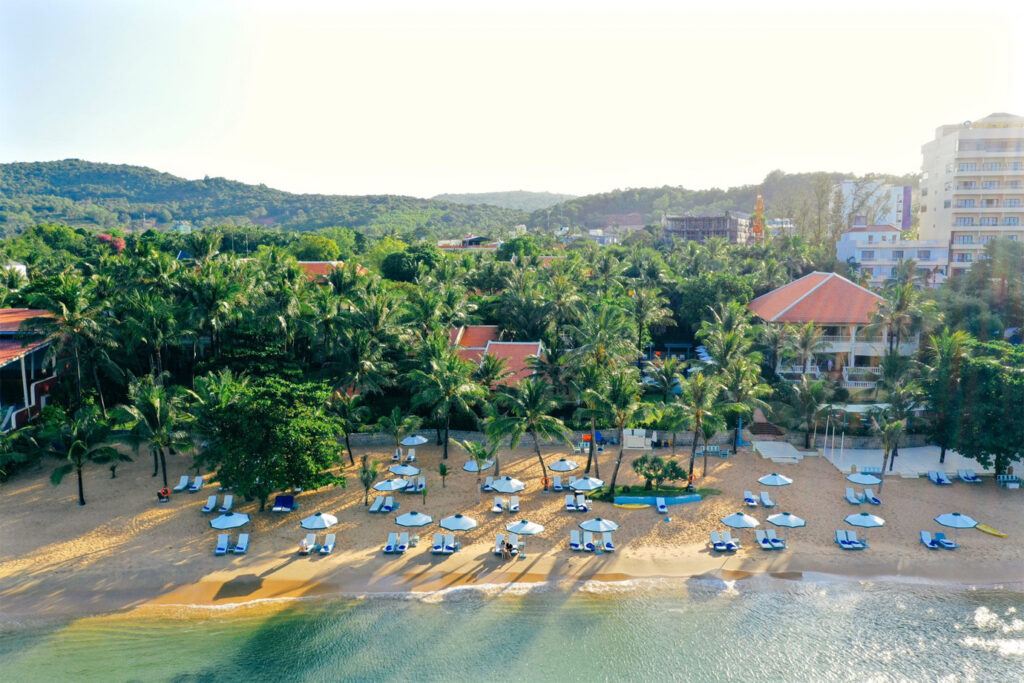
Phu Quoc’s pristine sandy beaches, a result of the surrounding coral reefs, and crystal clear water satisfy every visitor’s fantasy of a secluded tropical getaway. A number of small islands to the southern tip of the region are almost untouched, and offer soft white sand beaches and clear blue waters to anyone who makes the trip. On the main island, white sands and calm shores make many beaches popular with visitors. La Veranda Boutique Beach Resort enjoys a stunning location on popular Long Beach beach (Ba Keo) on the west side of the island, as well as numerous other options within easy reach.
The main island is not only blessed with beautiful beaches but also lush rainforest. With more than half of the island being a protected national park, Phu Quoc is also home to an important UNESCO biosphere zone. Transfers to Phu Quoc’s national park from La Veranda Resort take around an hour and allow visitors to experience hiking through a tropical jungle, where they can hopefully spot some of the wildlife that lives there, including endangered species such as the Silver Langur and Leopard Cat.
Phu Quoc’s location has contributed to one more essential part of island heritage. The surrounding seas provide perfect conditions for oysters to produce their precious stones, and pearls here have gained a reputation for being very high quality. This industry is so integral to Phu Quoc’s heritage that the island is often referred to as ‘Dao Ngoc’ or ‘Pearl Island’.
Whether visitors come to La Veranda Boutique Beach Resort Phu Quoc from near or far, what awaits is timeless elegance, a luxurious paradise where attention to detail and the wonders of nature meet. Between the sparkling azure waters of the Gulf and the colonial grandeur of La Veranda’s outstanding facilities, there are plenty of opportunities for memorable moments to be made on this beautiful paradise island of Phu Quoc.
Contact us
As a tropical Southeast Asian country with more than 2,000 miles of coastline, Vietnam is absolutely a perfect choice for those wanting to spend their summer holidays at beaches. Following are the best seashores in that peaceful country.
Nha Trang
Nha Trang is perhaps the most famous Vietnam coast as it has been listed as one of the most beautiful beaches in the world. Located in Southern Vietnam, Nha Trang is a dynamic city which stands by the sea. There are many amazing white-sand beaches in this city, namely City Beach and Hon Chong Chenh. Not only can visitors dive into the turquoise sea water, sunbathe in the sandy beach, they can also participate in some modern water sports such as wakeboarding, kite surfing, and banana boat rides. What’s more, in Hon Chong Chenh beach there exists a rock formation stretching towards the sea, which is an ideal place for taking photos.
Mui Ne, Binh Thuan
Mui Ne has recently become an attractive destination for Vietnam holidays. With long white sandy beaches and rock-free water, it is a perfect place for swimming. Also, Mui Ne is well-known with enormous golden sand dunes, which make travelers feel like they are in the Sahara Desert. Visiting Mui Ne, you can spend our time walking on barefoot on sandy beaches, watch the sunset and enjoy some outdoor activities on the sand dunes. Amazing, isn’t it?
Phu Quoc
Nestled in the Gulf of Thailand, Phu Quoc – the biggest island in Vietnam has many stunning beaches. The most famous one is Long Beach, located in the West of Phu Quoc Island. It has long and plain beach with soft yellow sand and surrounded by palms. It is an ideal place for sunbathing, swimming and watching the sunset. Long Beach is even more attractive because travelers can also explore the life of a fishing village and pearl farm there.
Cat Ba
Not only the South but also the North of Vietnam has many amazing beaches. Cat Ba is among the most famous ones in Northern Vietnam beaches. Cat Ba is an island on Ha Long Bay – which is considered one of new 7 wonders of the world. That area is well-known for its majestic sea with thousands of limestones and green water. If you want to explore the sheer beauty of Halong Bay but still hesitate because of the huge flocks of tourists there, Cat Ba Island would be your perfect choice. There are some jaw-dropping beaches in that island such as Cat Co 1, Cat Co 2 and Cat Co 3. Cat Co 1 and Cat Co 3 are linked by a Cliffside path that’s a joy to walk anytime, while Cat Co 2 provides travelers with plenty of bungalows and chalets which are suitable for romantic trips or honeymoon.
Co To
Another destination for Northern Vietnam trip is Co To Island, which is popular for its transparent blue sea, white smooth sand beaches. A must-stop destination here is Co To Lighthouse – where visitors can take a broad view of the spectacular Northern Gulf and watch the sunset. There is also a wild forest with colorful flowers and birds.
It is amazing to dive into the clean blue water to watch beautiful coral reefs while watching flocks of seagulls flying above.
Lang Co, Hue
It is a beach with a charming beauty which still remains intact in the Central of Vietnam, locating just about 1 hour driving from the UNESCO World Heritage – Imperial Citadel of Hue. Though not being on the recommended lists of travel agencies its beauty will definitely steal your heart. Here there is not only soft sandy beach but also poetic mountains and peaceful fishing villages. Lang Co would be a must-visit stop for those who want to watch flocks of storks flying back to their nest at dawn.
Non Nuoc Beach, Da Nang
Just about 20 minutes driving from the center of Da Nang, visitors will reach the picturesque Non Nuoc Beach. It is voted as one of the most attractive in the world in 2015. That sandy beach with sunshine all year round is the destination for travelers wanting to run away from the bustle of cities. Non Nuoc Beach is not only a swimming beach but also a place for outdoor activities like skydiving and surfing.
A Dream Wedding in Vietnam: Why La Veranda is the Perfect Destination for Your Big Day
Imagine exchanging vows on a pristine beach in paradise, the gentle waves whispering blessings as you embark on your journey of lifelong commitment. Picture a celebration infused with the vibrant colours and rich traditions of Vietnam, creating an unforgettable experience for you and your loved ones…
At La Veranda Resort in Phú Quốc, we transform dream weddings in Vietnam into reality. Nestled amidst lush tropical gardens and overlooking the turquoise waters of the Gulf of Thailand, our resort offers an idyllic setting for your special day. With our dedicated team of wedding planners, bespoke services, and exquisite venues, we'll ensure your Vietnam wedding is as unique and unforgettable as your love story.
Why Vietnam is an Exceptional Wedding Destination
Vietnam, with its captivating blend of natural beauty, cultural richness, and warm hospitality, is an enchanting destination for romantic weddings. If you would like to spend your wedding day in paradise with all of your favourite people surrounding you, Vietnam is the place! Here’s why:
Scenic Landscapes: From pristine beaches and verdant rice paddies, to majestic mountains and bustling cities, Vietnam offers a diverse range of backdrops for your dream wedding.
Cultural Charm: Embrace the rich traditions and customs of Vietnam, adding a touch of authenticity and uniqueness to your celebration.
Warm Hospitality: Experience the genuine warmth and hospitality of the Vietnamese people, ensuring a welcoming and memorable experience for you and your guests.
Gastronomic Delights: Tantalise your taste buds with the vibrant flavours of Vietnamese cuisine at La Veranda’s restaurants, from fragrant pho and fresh spring rolls, to aromatic curries and delectable seafood.
Affordable Luxury: Enjoy world-class amenities and services at a fraction of the cost compared to other popular wedding destinations.
The Ultimate Beachfront Venue for Intimate Weddings at La Veranda
Our villa resort in Phú Quốc offers the perfect setting for an intimate beachfront wedding.
Exchange vows on the soft sands, surrounded by the soothing sounds of the ocean and the gentle breeze. Our dedicated team will transform the beach into a magical haven, with elegant décor, personalised touches, and an impeccable service.
Imagine:
A flower-adorned archway framing your silhouette against the setting sun.
The soft sand cushioning your feet as you exchange vows.
The gentle sea breeze carrying your promises of forever.
A candlelit reception under the stars, with the sound of waves serenading your celebration.
Customisable Vietnam Wedding Packages for Every Couple
We understand that every love story is unique. That's why we offer a range of customisable Vietnam wedding packages to suit your individual preferences and needs.
Whether you envision a traditional Vietnamese ceremony, a Western-style celebration, or a fusion of both, our team will work closely with you to create a bespoke experience that reflects your vision.
Stress-Free Planning with Professional Coordination
Planning a wedding, especially a destination wedding in Vietnam, can be a daunting task.
At La Veranda, we take the stress out of the process with our dedicated wedding planning team. Our experienced coordinators will handle every detail, from venue selection and décor, to catering and entertainment, ensuring a seamless and unforgettable celebration.
Relax and enjoy your special day, knowing that every aspect is in expert hands.
Blending Local Culture with Personal Touches
At La Veranda, we believe in creating weddings that are both unique and authentic. We encourage couples to incorporate elements of Vietnamese culture and traditions into their celebrations, adding a touch of local charm and creating a truly memorable experience.
Whether it's a traditional tea ceremony, a vibrant Ao Dai dress, or a performance of traditional Vietnamese music, we'll help you weave cultural elements into your wedding, creating a beautiful fusion of heritage and personal style.
Plan Your Perfect Wedding at La Veranda Resort
Embrace the romance and enchantment of a destination wedding in Vietnam. Contact La Veranda Resort today to begin planning your dream Vietnam wedding. Our team is ready to assist you in creating a celebration that effortlessly tells your unique love story.
Experience the magic of Phú Quốc island, where natural beauty, cultural richness, and exceptional hospitality converge to create an unforgettable, romantic wedding experience!



Find Out More
Where is Phu Quoc ?
Vietnam Beaches
A Dream Wedding in Vietnam: Why La Veranda is the Perfect Destination for Your Big Day