There’s a certain indescribable energy to Vietnam; a pulse you feel from the very moment you arrive… Perhaps it’s in the fragrant steam rising from a delicious bowl of Pho, the gentle sway of lanterns in Hoi An’s twilight, or the jaw-dropping vista from the top of the Hai Van Pass…Deciding what to do in Vietnam means sifting through a wealth of extraordinary experiences – and for travellers who are seeking a destination that distils Vietnam’s overarching essence into a charming blend of relaxation, natural beauty, and subtle luxury, Phu Quoc Island emerges as the victor.Join us as we uncover the magic of Vietnam and reveal why Phu Quoc stands out as an exceptional choice to add to your SEA itinerary…
Why Vietnam is a Traveller’s Paradise
Vietnam offers a remarkable tapestry of unique experiences. Its geography spans from the mist-shrouded mountains in the north, the versatile surf off the coast of Da Nang somewhere in the centre, and the fertile Mekong Delta in the south. This diversity means there’s something for everyone to enjoy.Here are some highlights among the best places to visit in Vietnam:
Northern Charm
Explore the historical layers of Hanoi’s Old Quarter, cruise the otherworldly limestone karsts of Ha Long Bay, or trek through the rice terraces surrounding Sapa.
Central Heritage
Discover the imperial past in Hue, wander the lantern-lit streets of the ancient trading port of Hoi An, or relax on the beaches of Da Nang. Simply cruising through the scenic Hai Van Pass connecting these areas is an experience in itself.
Southern Energy
Immerse yourself in the dynamic pace of Ho Chi Minh City (formerly Saigon), explore the intricate waterways of the Mekong Delta, or venture to island retreats like the Cham Islands or, indeed, Phu Quoc!
Top Accommodations on Phu Quoc Island
As Phu Quoc has gained international recognition, its range of accommodation has broadened significantly. You’ll find everything from simple guesthouses catering to backpackers, to sprawling international resorts…For the discerning traveller, the options focus on quality, service, and location. Prime Phu Quoc island accommodation often features direct beach access, serene ocean views, private pools, and intuitive customer service that anticipates your every need.When selecting where to stay, consider what kind of experience you desire – seclusion and tranquillity, or proximity to the island’s main attractions? Finding the right base for your vacation is key to unlocking the best the island has to offer and if you’re searching for exceptionalPhu Quoc accommodation, careful research pays dividends indeed.
Affordable Things to Do in Vietnam’s Phu Quoc Island
Phu Quoc provides plenty of activities that allow you to experience its authentic charm without breaking the bank. These experiences prove that enjoying affordable things to do in Vietnam is possible even on a tropical island escape:
Explore Duong Dong Market
Witness local life unfold, sample exotic fruits, and haggle for unique souvenirs.
Savour Street Food
From Banh Mi sandwiches, to fresh seafood grilled by the beachside, Phu Quoc offers delicious and inexpensive culinary delights galore.
Beach Hopping
Beyond the main stretches like Long Beach, discover quieter sands at Sao Beach or Ong Lang Beach.
Visit a Pepper Farm
Learn about one of Phu Quoc’s famous exports and see how the peppercorns are grown and harvested.
Jungle ExplorationHike designated trails within the Phu Quoc National Park to experience the island’s lush interior and spot local wildlife.
Discover Local Industries
A visit to a traditional fish sauce factory offers a unique insight into a cornerstone of Vietnamese cuisine.
The Best Place to Stay in Phu Quoc for an Unforgettable Experience
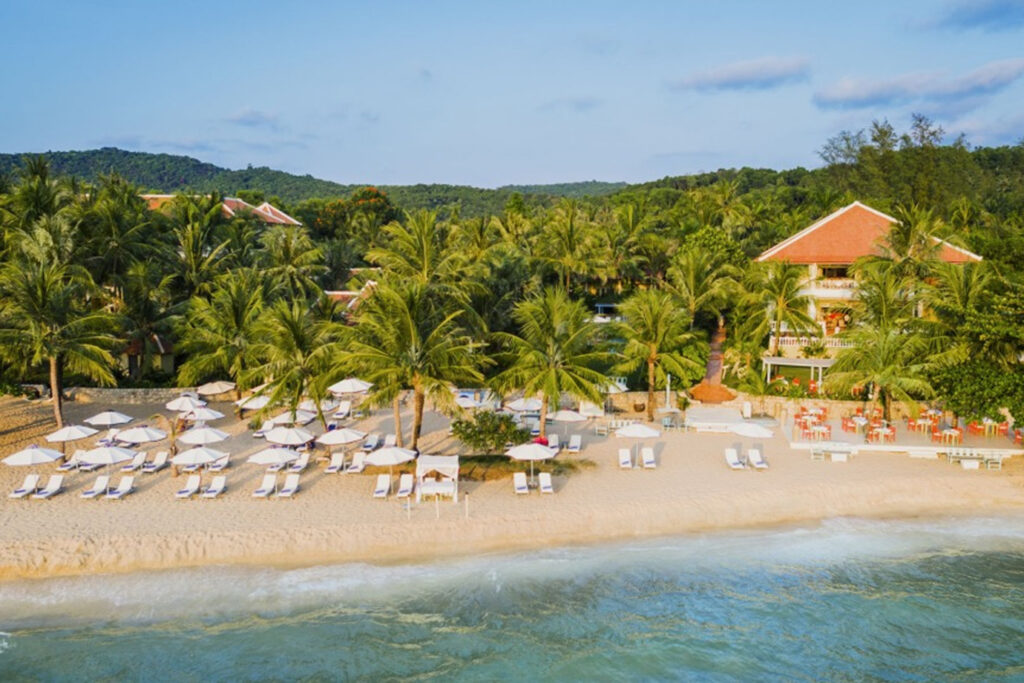
La Veranda Resort consistently ranks among the best places to stay in Phu Quoc. Inspired by a colonial-era seaside mansion, La Veranda evokes a bygone era of gracious living. Here’s what makes it distinct:
French Colonial Design
This sense of refinement and understated elegance would come to define 1920s Indochine, a captivating period of romance that marked the height of French colonial influence. An era of timeless sophistication on the frontiers of a rapidly changing world, brimming with discovery and adventure. La Veranda evokes the essence of this golden age, resurrecting the allure of a forgotten past and encouraging guests to be immersed in Phú Quốc’s storied history and rich tapestry of local flavours and textures. To discover serenity in refined comfort, look for hotels in Phu Quoc Island.
The Art of Service
In colonial-era Indochina, service was revered as an art form. La Veranda revives this timeless tradition by focusing on the smallest details.
It begins with a warm “Xin chào” from our hosts, elegantly dressed in couture áo dài, and continues with La Veranda’s signature Welcome Drink.
Personal letters from resort founder Madame Catherine offer a glimpse into the past, while handmade goodnight gifts create cherished memories for the future.
Exceptional Dining
The Pepper Tree restaurant offers award-winning fine dining with stunning ocean views, whilst Le Jardin provides relaxed beachfront options.
TĨNH Wellness Sanctuary
A tranquil haven dedicated to holistic well-being, offering treatments inspired by nature and local traditions.
Prime Beachfront Location
Direct access to a beautiful stretch of Long Beach, perfect for swimming, sunbathing, or sunset strolls.
Plan Your Visit to Phu Quoc Island Today
Phu Quoc Island offers a delicious slice of Vietnam: beautiful beaches, rich culture, delicious food, and a plethora of opportunities for both adventure and relaxation.Whether you spend your days exploring local markets and waterfalls, or simply unwinding by turquoise waters, the island provides a memorable escape…By choosing La Veranda Resort, you opt for elegance, comfort, and impeccable customer service. Are you ready to discover the charm of Phu Quoc?Book Now!
Array
Find Out More
Vietnam Vacation with Serene Spa and Wellness Experiences
Vietnam has become an increasingly appealing destination for travellers seeking rest, balance, and quiet indulgence. From its gentle pace of life to its deep-rooted wellness traditions, the country offers a natural setting for restoration.
A spa and wellness retreat in Vietnam allows travellers to slow down, reconnect, and focus on wellbeing without distraction. On the peaceful island of Phu Quoc, this experience feels especially refined, combining natural beauty with thoughtful luxury at La Veranda Resort, where wellness unfolds in a calm and unhurried way.
Why Phu Quoc Is the Ideal Destination for a Wellness Retreat
Phu Quoc is often chosen for its beaches and relaxed island rhythm, but its appeal goes far beyond scenery. The island’s atmosphere feels naturally calming, shaped by warm sea breezes, quiet stretches of sand, and lush greenery that encourages stillness. For travellers planning a spa and wellness retreat in Vietnam, Phu Quoc offers a sense of escape without isolation.
Days here move gently, creating space for rest and reflection. Wellness experiences feel more meaningful when surrounded by nature, and the island’s unspoilt environment supports that sense of balance. Choosing a spa in Phu Quoc means enjoying treatments in a destination where calm is part of daily life, not something carefully staged.
Moments linger here, and you’ll notice how mornings feel softer, conversations slow naturally, and time stretches gently, reminding you why unhurried travel restores perspective and deepens every experience completely together.
Award-winning Spa Treatments and Holistic Therapies at La Veranda
Wellness at La Veranda is centred on restoration, balance, and inner calm rather than rigid routines. Inspired by the Vietnamese philosophy of TĨNH, a state of peaceful stillness, each experience draws on holistic approaches, natural elements, and time-honoured healing traditions. As part of a thoughtfully curated spa retreat in Vietnam, guests are invited to reconnect with their natural state of wellbeing within the serene surroundings of a luxury hotel spa.
Set between the lush forest and pristine shoreline of Phú Quốc, TĨNH Wellness Sanctuary offers a range of treatments and wellness experiences designed to nurture the mind, body, and spirit:
Traditional Massage Rituals: Full-body therapies that release tension, restore energy flow, and encourage deep physical relaxation.
Aromatherapy & Organic Spa Treatments: Treatments combining essential oils and organic ingredients to calm the senses and promote holistic healing.
Body Therapies: Exfoliating and nourishing rituals that refresh the skin and support overall balance.
Steam, Herbal & Bathing Experiences: Warm sanctuaries including steam rooms and hot–cold bathing rituals that enhance circulation and relaxation.
Each experience is delivered with quiet attentiveness and care, allowing guests to fully surrender to a journey of wellness and renewal before returning to the gentle rhythm of life at La Veranda Resort Phú Quốc.
Wellness Packages for a Rejuvenating Phu Quoc Retreat
For travellers seeking a more immersive approach, La Veranda offers thoughtfully designed journeys that extend beyond individual treatments. These experiences are shaped around balance, rest, and personal well-being, making them ideal for a longer island wellness escape focused on renewal. The resort’s wellness packages suit different intentions, from gentle relaxation to deeper restoration.
Relaxation-Focused Programs: A combination of soothing therapies designed to release tension and encourage rest.
Detox and Renewal Journeys: Treatments that support clarity and balance through gentle, considered approaches.
Multi-Day Wellness Experiences: Extended programs that allow time for gradual, meaningful rejuvenation.
Personalised Wellness Paths: Flexible options tailored to individual preferences and pace.
These packages provide structure without pressure, allowing guests to experience wellness in a way that feels natural and unforced.
Stay at La Veranda: A Luxury Resort & Spa Experience
Inspired by the grandeur of a French colonial mansion, the resort’s large louvered windows open westward over a wide stretch of untouched beach and the azure waters of the Gulf of Thailand; the deep balconies, high ceilings, and period collectibles furnish 73 elegantly appointed rooms that transport you to a bygone era when life was slower and simpler. More refined. Evoking the classic charms of yesteryears with whispers of Phú Quốc’s storied history, this French colonial mansion waits to embrace you with comfort and luxury as you shed the layers of the outside world and reconnect with nature’s healing energies.
Dining experiences focus on freshness and balance, complementing the overall sense of well-being. Attentive service ensures each stay feels effortless, allowing guests to remain present and relaxed. Those planning a wellness-focused holiday can explore the spa offerings or contact us to arrange a personalised experience that aligns with their travel plans.
FAQs
What spa treatments does La Veranda Resort offer?
La Veranda provides a range of massages, body therapies, aromatherapy rituals, and steam and sauna experiences, all designed to promote relaxation and balance.
What makes Phu Quoc a good destination for a spa and wellness retreat?
Phu Quoc offers a calm island environment, natural beauty, and a slower pace of life, making it ideal for travellers seeking rest and restoration.
How do I book spa or wellness services at La Veranda?
Spa treatments and wellness experiences can be arranged through the resort before arrival or once you’re staying at La Veranda.
Regarding countries with no visa exemption agreements with Vietnam, travelers have to contact the Vietnam Embassies or Consulates in their countries to register or extend the visa. And of course, for those with exemption agreements, their citizens do not need to get a visa to travel to Vietnam. They are allow to enter Vietnam for a certain time, depending on the agreements. (fabulouseyebrowthreading.com) The visa-exempted nations are as follows:
Country
Days
Laos, Cambodia, Thailand, Singapore, Indonesia, Malaysia
30
Philippines
21
Japan, South Korea, Russia, Sweden, Finland, Denmark, Norway, Germany, France, Spain, Italy, the UK
15
Myanmar, Brunei
14
When you have arrived in Vietnam already, if any problems occur, you should contact you country’s embassies and consulates in Vietnam to ask for support. There are 80 embassies in Hanoi, and 58 consulates and 3 representations in other cities.
Followings are the lists and contacts of the Embassies and Consulates in Vietnam.
American Embassy
The American Center 1 st Floor, Rose Garden Tower, 170 Ngoc Khanh Street
HN
844-3850-5000
http://vietnam.usembassy.gov/
Argentinian Embassy
360 Kim Ma Street, Daeha Business Centre, BA Dinh District
HN
84438315262 / 38315263
http://www.embargentina.org.vn
Australian Consulate
5th Floor, The Landmark Building, 5B Ton Duc Thang, District 1
HCM
84-8 3521 8100
http://www.hcmc.vietnam.embassy.gov.au/
Australian Embassy
8 Dao Tan Street, Ba Dinh District
HN
84-4 3774 0100
http://www.vietnam.embassy.gov.au/
Austrian Embassy
Prime Center, 53 Quang Trung, 8. Floor, Hai Ba Trung District
HN
84/4 3943 3050-3/3943 3051
http://www.aussenministerium.at/hanoi
Bangladeshi Embassy
Villa # D6B-05, Vuon Dao, Compound, Subway #675, Lac Long Quan Road, Tay Ho District
HN
84-4-3771-6625,/3771-7829
Belarusian Embassy
To Ngoc Van Road, 66, Tay Ho District
HN
84 4 37 19 29 74
http://www.vietnam.belembassy.org/
Belgian Embassy
Ha Noi tower, 9th floor, 49 Hai Ba Trung, Hoan Kiem District
HN
84 4 3 934.61.77/7884 4 3 934.61.79/80/81
http://www.diplomatie.be/hanoi
Brazilian Embassy
14, THUY KHUE STREET – villa D-6/7, Tay Ho District
HN
844 843-0817/2544
British Embassy
31 Hai Ba Trung Street, Central Building
HN
84 4 936050084 4 9360550 / 46
www.uk-vietnam.org/
Bulgarian Embassy
5 Nui Truc Str, Van Phuc, PO Box 10
HN
84 4 38-45-29-08
Cambodian Consulate
No. 41, Phung Khac Khoan
HCM
848 829 2751
Chinese Consulate General
39 Nguyen Thi Minh Khai Street, District 1
HCM
848-8292457
Chinese Embassy
46 Hoang Dieu Road
HN
844 8453736
http://vn.china-embassy.org/eng/
Consulate General of Canada
9th Floor, The Metropolitan, 235 Dong Khoi Street, District 1
HCM
011 84 8 827-9899
http://www.international.gc.ca/vietnam
Consulate General of France
27 Nguyen Thi Minh Khai, BP 307, District 1
HCM
[84] 8 35 20 68 00
www.consulfrance-hcm.org/
Consulate General of Indonesia
1 8, Phung Khac Khoan Street, D 1
HCM
84-8 825-1888, 825-1889
Consulate General of Malaysia
1 208 Me Linh Point Tower, No. 2, Ngo Duc Ke Street, District 1
HCM
84-8-829 9023
www.kln.gov.my/perwakilan/hochiminh
Consulate General of the Federal Republic of Germany
1 26 Nguyen Dinh Chieu, District 3
HCM
84 8 38 29 19 67
www.ho-chi-minh-stadt.diplo.de/
Consulate General of the Lao PDR
93 Pasteur St, District l
HCM
84 8 829-7667or 829-9275
Consulate General of the Lao PDR
1 2 Tran Quy Cap
Danang
84 51 821-208
Consulate General of the Netherlands
Saigon Tower, suite 901, 29 Le Duan Boulevard, District 1
HCM
84 8 8235932/33
www. mfa.nl/hcm-en
Consulate General of the Philippines
40-5 Pham Viet Chanh St., Ward 1 9, Binh Thanh District
HCM
84 8 3518 0045
As a coastal country in Southeast Asia, Vietnam consists of thousands of islands and islets, which are geographically significant to Vietnam in particular and the world in general. Followings are some major islands in Vietnam which are worth visiting.
Cat Ba Island
Cat Ba, an island on Ha Long Bay, possesses one of the most beautiful Vietnam beaches. It is an ideal destination for those who want to explore the sheer beauty of Halong Bay but cannot stand the huge flocks of visitors of main Halong tours.
Cat Ba Beaches attract travelers with soft white sand and turquoise sea water. It has many spectacular seashores, namely Cat Co 1, Cat Co 2, and Cat Co 3. There is a Cliffside between Cat Co 1 and Cat Co 2, which is definitely a joy to walk, while Cat Co 2 offers visitors with plenty of bungalows and chalets that are suitable for romantic trips or honeymoon.
Almost half of the Island and about 90 square kilometers of the adjacent waters belongs to Cat Ba National Park to protect the island’s eco-biological diversity.
Co To
Another notable island in Vietnam is Co To Island which is renowned for white smooth sand beaches and transparent blue sea. It is the furthest inhabited island from the mainland of the North.
Co To beach remains intact from human’s influence, thus offering white sandy shore and blue sea water. The beach is amazing whenever you look at: day or night, at dawn or at twilight, in the morning mist or under the moonlight. Different times of the day provide you with different emotions and experiences.
There is a romantic path leading to the Lighthouse, where you can take a bird’s eye view of the beautiful and peaceful Co To Island and feel the fresh atmosphere on the ocean. There is also a wild forest with colorful flowers and birds around that area. In addition, Co To Island has many majestic rock formations – perfect places for shooting photos.
Cu Lao Cham
Cu Lao Cham (Cham Island) consists of 8 small islands which have been designated as UNESCO World Biosphere Reserve.
The picturesque scenery and leisure activities in Cu Lao Cham are a huge appeal to tourists. Cu Lao Cham is the paradise for adventurers, where they can participate in fascinating activities ranging from traditional activities such as swimming on aqua-green water, sunbathing on white sandy beaches, and exploring the forest to marine life discovery. The coast is a collection of plentiful sea creatures and coral reefs. Travelers will see the majestic marine world with an abundance of colorful fishes, lobsters, mollusks under the turquoise sea water.
There are also cultural attractions in the island such as the exhibition of Cham Island’s nature and culture, the old well, Lang Ong, and Huong fishing village. There exist the vestiges of Cham people’s civilization.
Phu Quy Island
Phu Quy Island in Binh Thuan province, with its jaw-dropping landscape and unique culture, is well-known as a paradise for summer escape. Its name literally means “wealth” and “honor”.
Beaches in Phu Quy Island are amazing. They are stunning with softy white sand and blue water and more importantly, far from the residential areas. Vinh Trieu Duong is an incredibly beautiful beach that is suitable for swimming while Bai Nho has rock formations and colorful reefs under the water. The lighthouse and wind turbines are also great places to watch the sunset.
The island is also famous for its cultural spots. Linh Son pagoda on Mount Cao Cat and Linh Quang Pagoda are important religious centers of Phu Quy residents, where they can not only immerse their soul into the peaceful atmosphere but also take a bird’s eye view over the breath-taking surroundings. Van An Thanh temple has the giant whale skeleton, where you can learn about the whale worshipping tradition of the fishermen.
Con Dao
In the southern coast of Vietnam stands Con Dao Islands – an archipelago of 16 uninhabited islands and islets, which is a perfect destination to run away from the hustle and bustle of cities.
Con Son – the biggest island of Con Dao used to be the site of French-run prisons for Vietnamese soldiers who get involved in the Vietnam War. You can find most of the prisons in Con Son town, where there are plenty of prison cells and infamous tiger cages.
In addition to the significant historic relics, Con Dao consists of unspoiled beaches such as Bai An Hai, Mui Ca Map (Shark Cape), and Nhat Beach. These are perfect for swimming and sunbathing. Seafood is also extraordinarily fresh.
The uninhabited islets are also great to explore, where travelers can see the spectacular wildlife settings with plentiful flora and fauna.
Phu Quoc Island
Nestled in the Gulf of Thailand, just 45km southwest of the Vietnamese mainland, Phu Quoc is Vietnam’s largest island. It is also known as “Koh Tral” in Cambodian, as it lies just 15km off the Cambodian coast.
Phu Quoc has become an attractive destination with beautiful beaches, lush forests, and fascinating hills. Several stunning beaches in Phu Quoc are suitable for different types of entertainment. If you want to swim, Long Beach, Sao Beach, Ganh Dau Beach, Ong Lang Beach, and Vung Bau Beach are ideal places. But if you want to get away from the crowd to walk hand-in-hand with your life partner on the romantic and tranquil sandbar, Thom Beach and Rach Vem Beach are more suitable. Some beach resorts and amusement centers are open to provide travelers with best services and experiences.
The island remains intact as about 70% of the area belongs to Phu Quoc National Reservation Park. Recognized as a UNESCO Biosphere Reserve, this massive natural park spans over 314,000 square meters of unique tropical flora and fauna, dense forests, and evergreen mountain ranges. Camping, hiking, bird-watching, and photography are available there.
Phu Quoc is also home to the famous Vietnamese specialties: fish sauce, pepper, and pearl. Many fish sauce factories, pepper plantations, and pearl farms are available to visit. It is a great opportunity to take a closer look at the traditional careers of Vietnamese people.


Find Out More
Vietnam Vacation with Serene Spa and Wellness Experiences
Embassies & Consulates
Vietnam Islands