Phu Quoc is quickly earning recognition as more than a beach destination. Its evolving culinary scene now attracts travellers who value flavour, craftsmanship, and atmosphere as much as scenery. A refined fine dining restaurant in Phu Quoc offers something distinct, where local ingredients meet European technique in an elegant island setting. At La Veranda, fine dining feels relaxed yet polished, shaped by French influence, coastal surroundings, and a genuine respect for seasonal produce.
Why Phu Quoc Is Becoming a Fine Dining Destination
The island’s rise as a culinary destination is closely tied to its natural advantages. Fresh seafood arrives daily, tropical produce grows nearby, and international influences blend seamlessly with Vietnamese traditions. This balance has helped elevate fine dining in Phu Quoc, giving chefs the freedom to create menus that feel both refined and rooted in place.
Dining here feels unhurried, enhanced by sea views, warm evenings, and attentive service. As more travellers seek meaningful food experiences alongside relaxation, Phu Quoc continues to attract restaurants that value quality, technique, and thoughtful presentation.
Quiet conversations linger longer, and shared plates encourage connection, allowing flavours and memories to unfold slowly across the evening together.
Signature Dishes and Culinary Highlights to Try
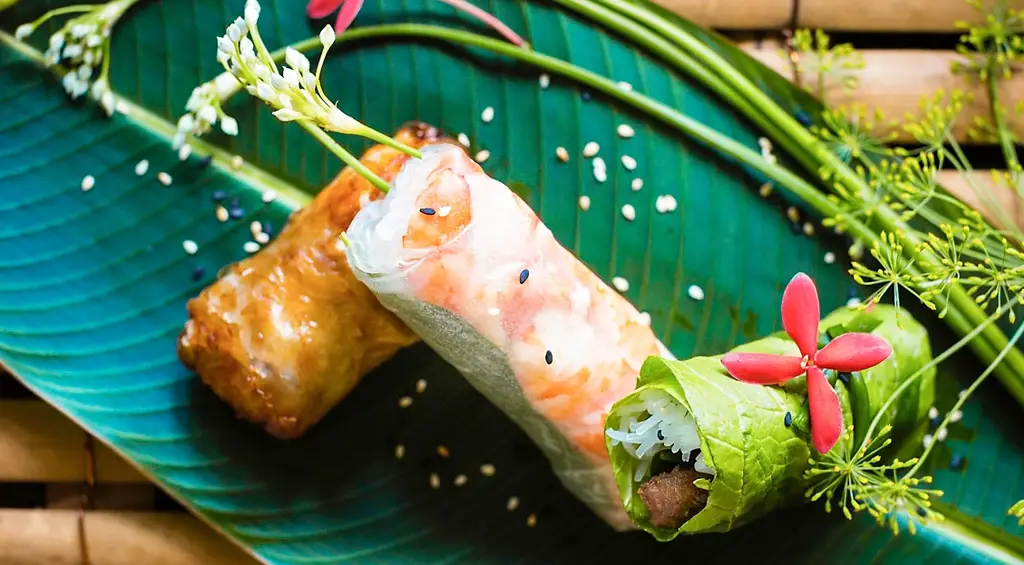
Fine dining on Phu Quoc reflects a careful dialogue between cultures, where French technique enhances local flavours rather than overshadowing them. Influenced by French dining in Vietnam, menus often celebrate simplicity, balance, and seasonal expression, offering an experience shaped by fine dining gastronomy rather than excess.
Seasonal Seafood Creations: Freshly caught fish and shellfish prepared with classic techniques that respect natural flavour.
French-Inspired Sauces: Delicate reductions and emulsions that add depth without overwhelming the dish.
Locally Sourced Produce: Tropical herbs, vegetables, and spices used thoughtfully to reflect the island’s character.
Artful Presentation: Plates designed with restraint, allowing colour, texture, and composition to speak quietly.
Together, these elements create meals that feel refined yet approachable, inviting diners to savour each course at a comfortable pace.
The Peppertree: Award-winning Fine Dining Destination in Phu Quoc
The Peppertree stands as a defining example of refined island dining, recognised as an authentic French restaurant with a clear sense of place. Overlooking the sea, its elegant setting complements a menu that balances tradition with creativity, reinforcing its reputation as a leading fine dining restaurant in Phu Quoc.
Here, the focus remains on precision, seasonality, and flavour harmony. Each dish reflects the chef’s respect for French culinary foundations while embracing the freshness of local ingredients. Combined with attentive service and a calm ambience, dining at The Peppertree feels quietly memorable rather than theatrical.
Romantic and Special Occasion Dining in Phu Quoc
Phu Quoc’s relaxed elegance makes it a natural choice for intimate dinners and celebrations. Whether marking an anniversary or planning a memorable evening, the island offers settings that feel personal and thoughtfully designed, appealing even to travellers searching for “fine dining restaurants near me” during their stay.
Candlelit Evenings: Soft lighting and gentle ocean sounds create a naturally romantic mood.
Sunset Dining: Tables positioned to capture changing colours across the sea.
Dinner Under The Stars: Every moment exudes romance as the sand and sea join forces to create the most memorable of backdrops. Under the twinkling stars and the gentle glow of torchlight, let your emotions soar with an exquisite beachfront dinner at La Veranda Resort Phú Quốc.
Personalised Touches: Menus and details tailored to meaningful occasions.
These experiences transform a meal into a moment worth remembering, shaped by atmosphere as much as cuisine.
Why Choose La Veranda Resort for a Luxury Culinary Experience
Dining at La Veranda Resort reflects the resort’s broader philosophy of understated elegance. French colonial architecture, sea-facing views, and attentive hospitality create an environment where fine dining feels both special and relaxed. Ingredients are selected with care, menus evolve with the seasons, and wine pairings are chosen to complement rather than dominate.
Service remains intuitive and warm, allowing guests to focus on the pleasure of the table. Those planning an evening of refined dining can explore the restaurant’s offerings or book a table to enjoy a thoughtfully crafted culinary experience during their stay.
FAQs
Does Phu Quoc offer luxury or French dining options?
Yes, the island features several refined restaurants, including venues inspired by French culinary traditions, offering elegant dining experiences in relaxed coastal settings.
What types of dishes can I expect at fine dining restaurants in Phu Quoc?
Menus often feature fresh seafood, seasonal produce, and dishes influenced by European techniques combined with Vietnamese flavours.
How do I book a table at a fine dining restaurant in Phu Quoc?
Reservations can usually be made directly through the restaurant or resort, either online or by contacting the dining team in advance.
Array
Find Out More
How to go to Phu Quoc
There are two ways to get to Phu Quoc: by sea and by air.
Domestically, flights to Phu Quoc are available from many cities in Vietnam including Ho Chi Minh City (45-minute flight), Hanoi, Rach Gia and Can Tho via Vietnam Airlines (the national carrier) and several budget airlines: Jetstar Pacific, Vietjet air and Vasco (a subsidiary of Vietnam Airlines).
In peak season, there can be as many as 15-20 daily domestic flights to Phu Quoc, but it is advisable to book early to avoid disappointment as flights to Phu Quoc can sell out during the high season of December to April. From Phu Quoc International Airport, visitors can travel the 9 km to the main town of Duong Dong by taxi, motorbike or hotel transfer.
Internationally, there are direct flights to and from Phu Quoc from Siem Reap, Cambodia and Singapore via Vietnam Airlines with more routes being added all the time.
Best of all, because Phu Quoc is classified as a Special Economic Zone, visitors of all nationalities flying in / out of Phu Quoc only (and not visiting the Vietnamese mainland) are granted a visa exemption to stay up to 30 days. Please check with the Vietnamese embassy or consulate in your country for additional requirements including having a passport valid for at least 6 months beyond your stay and a round-trip ticket to / from Phu Quoc.
Alternately, getting to Phu Quoc by ferry is cheap and easy. Ferries leave from the coastal towns of Rach Gia or Ha Tien on the Vietnamese mainland. If traveling from Cambodia, Ha Tien is easily accessible from the seaside resort towns of Kep (25 km) and Kampot (66 km).
There are a few ferry companies including Superdong, Duong Dong Express and Ngoc Thanh, with Superdong offering the most reliable service, providing one morning and one afternoon departure from Rach Gia for the 2.5 hour journey and four daily departures from Ha Tien for the 1.5 hour trip. There is also a slow ferry from Ha Tien to Phu Quoc operated by Thanh Thoi for those traveling with cars. Ferry tickets can be easily bought through your hotel, at travel agencies or at the ferry dock.
The best time to travel by ferry is from late October to May when the weather in Phu Quoc is dry and the seas are calmer. During the wet / monsoon season (June to September), ferries are still scheduled to run daily but inclement weather may make for rough seas or cancellations.
Most fast and slow ferries will take you to Bai Vong Port on Phu Quoc, close to Long Beach. From there to the main town of Duong Dong, there are multiple transportation options, including motorcycle taxis (each able to carry one passenger with minimal luggage), taxis and shared mini-buses.
Some are sizeable and central while others are tiny assembles of boats and houses built on stilts. Nevertheless, they all carry a unique charm and allure that speak to the hearts of adventurous travellers. The towns and villages in Phu Quoc impress one way or another. Starting with two incredible towns around which all island action unfolds, those of Duong Dong and An Thoi, and moving on to the most charming and adorable fishing villages on the island, you will soon realise that Phu Quoc undoubtedly deserves a place on everybody’s must-visit list.
Duong Dong Town
Duong Dong is a significant settlement on the island and a point of reference for nearly everything you do or everywhere you go around Phu Quoc due to its geographical location. As you will see, almost all directions have Duong Dong as reference! For everybody coming to Phu Quoc, Duong Dong is the town that has it all, from fine dining facilities and lovely natural landscape to luxury resorts offering modern comforts and amenities, and breath-taking views, such as La Veranda, which is located in the heart of the town, having all main attractions within range (less than a 5-minute radius). Duong Dong, though, remains a fishing harbour that more than 50% of the population on Phu Quoc call home. Hosting a wide range of sightseeing attractions, including the Cau Temple, a plethora of eateries where you can sample great seafood, the marvellous Duong Dong night market, and many more, it is a place that rightfully deserves your attention.
An Thoi Town
Famous for its prison concentration camp (aka Coconut Tree Prison), An Thoi is a booming small town at the southernmost end of the island and the largest fishing harbour with a protected bay that can accommodate container ships and large vessels. It is even a notorious starting point of many snorkelling and scuba diving trips to the archipelago’s southern regions. Also known for its pristine, white sand beaches, those of Bai Khem and Bai Sao, fish sauce factories, dazzling coral reefs, and commercial fishing industry, An Thoi is one of the most developed areas of Phu Quoc Island, with cafes, hotels, restaurants, banking facilities, local markets selling fresh seafood, vegetables, and fruit, and a small hospital. The islands’ naval bases are also located here.
To get there, all you need to do is hire a bike, take a taxi or get a boat from Rach Gia, depending on which part of the island you are heading here from.
Ham Ninh Village
Conveniently tucked at the east coast of Phu Quoc, less than 20km from the centre of Duong Dong Town, Ham Ninh Commune is home to peaceful beaches, the beautiful Bai Vong Port, and the charming village with untouched splendour of Ham Ninh, particularly famous for its nightly fishing tours in pursuit of squid.
Ham Ninh is believed to have been founded by fishermen and people from other places that came to the then deserted island to exploit seafood before nobody-knows-how-many-years-exactly. Some references place Ham Ninh as a hamlet of Phu Quoc under Ming Dynasty in the Ham Chau District, and changed hands several times at the beginning of the French colonial period, as it was mastered by Kien Gian, then Rach Gia, and finally Ha Tien. It was not until 1874 that the village eventually became part of the Phu Quoc District. However, its “masters” succeeded one another even still, and moved around a lot, from a community belonging in the Pha Quoc District to Ha Tien District to Chau Doc and then back to Ha Tien District; and, all that within a decade until 1888.
Over the years, Ham Ninh became a thriving fishing village and a safe and quiet mooring spot for both boats of people fishing in the wider Duong Dong sea region and ships from the mainland that often drop anchor here and deliver seafood and transport goods. Even when surrounding areas become crammed with people and the influences of modern life, Ham Ninh maintains its rustic appeal and lives in perfect harmony with nature. All that aside, it is now also one of the most abundant sources providing Phu Quoc with fresh crab and cheap seafood year round. In fact, the fish is so plentiful here that you can even see the pier swarmed by little children selling starfish that they caught in the shallow waters surrounding the village!
There is much to fall in love with this charming place. With majestic Ham Ninh Mountain and lush green jungles as the backdrop and an idyllic setting during low tide, when the shores turn into vast stretches of sand, or at high tide, when the floods nurture the land and lick the edge of the forest, Ham Ninh can literally steal your heart stone after stone. Distinguished by thatched bamboo leaves houses and facing the immense shimmering sea, it offers sweeping views up to the Nghe Islet and Pirate Island in the south and Ong Doi Headland (the last headland of Phu Quoc) in the south, alongside some of the most romantic sunsets.
Le Bat
Le Bat is a small fishing village on Phu Quoc Island not much visited by tourists. This picturesque land is a photographer’s dream location due to the exotic landscape around it. Some bikers make short stops at this hamlet on the way to Vung Bau Beach and Cua Can community (coming from Ganh Dau); a definitely scenic route worth exploring.
To get here, one needs detailed directions from someone that really knows this place. So, if you are planning a visit, follow the street to Cua Can (from Duong Dong), head north of Ong Lang Beach, cross the bridge after Hoang Yen Resort, and turn left. Le Bat should be welcoming you to its quaint premises! From there, the glistening sea and powdery beach of Vung Bau with the odd-looking rock formations is a short ride away on dirt roads.
Rach Vem
Home to Rach Vem beach, Rach Vem village is not the place you would choose to lie around on the beach as it not that developed; unless you like to relax and spend time at remote beaches. In this case, do bring food and water with you because apart from the Phong Lan guesthouse, there are not many opportunities to dine or shop here.
The locals are friendly, hard-working people that rely on the sea to feed their families. As for their houses, most of them are built on poles and stilts especially the shelters, right out on the sea, offering an interesting sight on their own. Apart from fishing, the inhabitants also breed ducks and chicken which run freely around the huts, along with Phu Quoc Ridgeback dogs, the native (friendly) dog breed of the island (the only one with roots in Vietnam), which are usually found guarding pepper farms and areas where families live.
Life has not changed much around here during the past years, which can be fascinating. Tourists, which is a rather rare find in this area, are greeted by a cheerful bunch of children following them around while the locals are willing to get into a nice chat with travellers provided they know Vietnamese or Khmer. Just don’t mention anything about the terror regime of the Khmer Rouge or the Vietnam-Cambodia war as it is a very sensitive topic.
For those relaxing, me-times when you walk along Rach Vem’s shore and watch the sea spreading all the way to the coast of Cambodia across the Thailand Gulf, one can’t help but think this must be a slice of heaven and be hesitant to shut their eyelids out of fear of missing out on such raw, authentic beauty.
Cua Can
A couple of kilometres north of Ong Lang Beach, 10 kilometres south of Ganh Dau, and some 14 kilometres north of Duong Dong town lies the lovely village of Cua Can. Distinguished by pepper plantations, unique ecosystems, and rickety wooden bridges strictly for the use of motorbike and foot traffic, Cua Can village is the getaway to the mighty Cua Can River, which runs deep into the pulsing centre of Phu Quoc, and Cua Can Beach – a great spot for picnicking and swimming in the area.
If you visit the region, joining a river tour and kayaking the river are some of the activities definitely worth trying for the serene and calm scenery that will surround you. As for lovers of photography and bird-watching, this is the place to be. Grab your camera and catch the flocks of hornbill flying above you! Also, through the Cua Can River, you will have access to the interior of the magnificent Phu Quoc National Forest.
Despite its fairly small size and the less than 4,000 residents, most of whom living in houses built on stilts over the river, Cua Can village has a few places to chill out and enjoy a roadside drink before heading to the more isolated beaches of the North. It is also home to a lovely, yet secluded, sand bar located on the north, which is much favoured by tourists thirsty for adventure and locals alike.
Now, if you feel hungry while exploring the roundabouts, there are street-side eateries and a more upscale restaurant that will treat your taste buds with delicious flavours at affordable prices.
To get there, take the Cua Can road (one of the island’s main roads) that is easily accessible via Duong Dong up to Ganh Dau and the Vinpearl Resort. From there, drive passed Ong Lang Beach and Vung Bau Beach, and you will reach Duong Dong Town. Cross the river (choose either Hung Vuong Road Bridge or Nguyen Trung Truc Road Bridge) and navigate your way towards Cua Can Road.
Ganh Dau
Nestled in the north-western coast of the island, about 30 kilometres from Duong Dong town, Ganh Dau village will allow you to take in magnificent sea panoramas that go as far as the Cambodian coastline. Here, you will find some of the most tranquil and peaceful beaches on Pearl Island, including the scenic Ganh Dau and Bai Dai beaches, away from the crowds of the south.
If you come here with expectations to find high-end resorts and boutique hotels, you’d better look elsewhere because this small fishing village will only provide you with the basic supplies, such as water, food, petrol and, perhaps, a nice haircut too. But, that is the charm of it, especially if you are after unique experiences infused with the local lifestyle.
As you go by people’s homes and walk along the shore, you will see how things were once done throughout the island and how people used to live before some of the areas become more touristy and developed; plenty of fishing boats docked in the harbour, children playing in the streets, and anchovies drying out in the sun before they reach their final destination in a can comprising a key element of the famous Phu Quoc fish sauce. Ganh Dau still holds on to that traditional lifestyle while carefully (and slowly) adopting some modern life features.
To savour a tasty lunch, you could either drive a kilometre or so past the village and try Gio Bien’s seafood dishes (a delightful beachside restaurant) or head to the floating fish eatery on the northeastern side of the village. In the latter case, you will need to boat ride to get there, which will offer you additional awe-inspiring views to take with you back home.
Hon Thom
Located on the second largest island in Phu Quoc and the largest island in the An Thoi archipelago, Hon Thom Island (aka Pineapple Island), the picturesque Hon Thom village with its 2,500 inhabitants is in the heart of a major economic activity taking place on the island. Chances are, we will soon witness a profound transformation in everything about living here, given the plans to develop Hon Thom Island into a tourist destination that will please tourists with vacation homes, resorts, and even a golf course. And, let us not forget the 8-kilometre long Phu Quoc cable car ride that already connects the island of Phu Quoc and Hon Thom, offering a genuinely heart-stopping experience as you hop between islands and soar over coral reefs and a fantastic cobalt sea.
Until all that proposed upgrade takes place, you can walk along the two main beaches around Hon Thom village, with the eastern one expected to remain a pleasantly old-fashioned fishermen’s community as it is under the radar of the construction and development plans focusing on the western side at the moment.
If you wish, you can also explore the entire island, which is no more than a 30-minute drive (you can rent a motorbike taxi, aka Xe Om) and watch the sun slip behind the horizon from Hon Thom’s main beach. Or, why not, try snorkelling? The waters are rich in superbly beautiful coral reefs and squids. Many tourists prefer cliff climbing instead as it enables them to pay eyes on the incredible natural landscapes specked with sugary beaches, fishermen knitting their nets, coconut rows, crystalline waters, and a variety of rare animals living here, including groupers and turtles. All that combined transfuse a peaceful and soothing, soul-filling sensation.
Hungry? Besides the street-side restaurants serving delicious seafood, there are also a few local eateries near the shore preparing traditional Vietnamese snacks and food.
To get here, drive south from Duong Dong Town until you reach An Thoi Town after 40-50 minutes or so. Park at the port (parking and entrance fee required, totalling VND 15,000) and catch the local ferry to Hon Thom Island (runs every hour until 17:00). If the weather is good, you will be at Hon Thom Island in about 45 minutes, and the ferry costs VND 30,000 (one-way ticket). To get off the boat and venture onto the island, you will need to be taxied out of the boat, which will cost you an extra VND 10,000.
Life in Phu Quoc Island, or Pearl island if you wish, may be hard but the people are friendly, cheerful, and living the magnificence and uniqueness of every moment their own special way. And, as you drive through this green dot of unsurpassable, unspoilt beauty, you can rest your eyes on mind-blowing scenery capable of caressing your inner Self, allowing you to rejuvenate, unwind, and find Zen in the chaos everyday life.
I. HOW TO TRAVEL AROUND VIETNAM?
Travelling inside Vietnam is quite easy. In most of the cities, there are local bus systems with one-way ticket of 7,000VND (about 0.3USD) for one person. Maps with bus routes can be easily found in every bookstore. The bus will follow a fixed route, thus it is necessary to check whether the bus is heading to your target destinations.
Another popular means of transport is the “xe om”, which is simply the motorbike taxi. There are several “xe om” drivers who are sitting on their scooters and wearing helmets. Recently, two big “xe om” systems have been launched by Grab, which offer cheaper prices and better safety. If going with traditional “xe om” drivers, it is better to negotiate the fare beforehand to avoid being overcharged. On the contrary, if travelers use Grab services, they might get a great deal without having to bargain.
Taxis are also plentiful in the cities. For the sake of safety, go with reputable taxi companies such as Mai Linh, Vinasun. Grab and Uber provide taxi services, too. Be careful when going with independent taxis because they often overcharge travelers, especially foreign tourists.
Regarding traveling to other regions within Vietnam, three main options are available: flight, bus, and train.
Vietnam has four domestic airlines: Vietnam Airlines, VASCO (a spin-off of Vietnam Airlines), VietJet Air, and Jetstar Pacific. Vietnam Airlines and VASCO are the most reputable agencies which are renowned for their service and timeliness. The other two are budget airlines offering cheaper tickets. However, their additional services and flight delays have been falling into disrepute.
Another low-budget way to travel around Vietnam is by long-range buses. Sleeper buses are preferable for long journeys (4 hours and more), even though the seats are quite small for foreigners. It might be hard for taller passengers to stretch out completely. Buses are normally affordable, but some people recommend that travelers should not go at night due to road safety issues.
The last option is going by train. Going by train takes the same amount of time as by buses. Trains provide more space and facilities than buses, and more importantly, it is safer to go by train. In addition to the ordinary tickets, some agencies provide privately-run sleeper-car attached to the train. There are luxury services, but it might cost a considerably high expense. Train tickets are sold at the railway stations, via travel agencies, or via your hotels. Visitors can also book the tickets online.
Many adventurous travelers love to rent motorbikes for their trekking trips. They can freely go wherever and whenever they want. Some even choose to buy motorbikes and pass it on at the end of their journeys. Remember that a Vietnamese driving license is required if you want to ride a motorbike in this country.
II. WHERE TO TRAVEL IN VIETNAM?
Vietnam is a beautiful country which offers several interesting destinations for different groups of travelers. Followings are some most recommended tourist attractions in this S-shaped country.
Halong Bay
Recognized one of new Seven Wonders of the World, Halong Bay has proved itself as a wonderful destination for Vietnam tours.
Halong Bay consists of thousands of majestic limestone islands and islets that are covered by turquoise sea water. Taking a Ha Long Bay trip, visitors will spend their time discovering the sheer beauty of narrow lagoon and grottoes while gliding on the blue ocean.
You can go aboard on tourist boats to travel around the Bay. Not only can you watch the spectacular limestone and caves, you can also visit some floating villages such as Cua Van, Vung Vieng, and Cong Dam to see the life of people there. For more luxury trips, there are high-end cruises available for overnight tours on the Bay. You may catch the glorious sunset on the sea or watch the sparkling night sky while getting served with best services. Also, it is interesting to go kayaking around the Bay. With its significant geological value, Halong Bay has been listed as UNESCO World Natural Heritage for two times.
Hanoi
Of course, Hanoi – the capital of Vietnam cannot be missed in any Northern Vietnam destination lists. The beautiful and peaceful city with a thousand years of history possesses alluring beauty which has been highly appreciated by both local and foreign tourists.
The thousand-year capital of Vietnam still well preserve some tangible and intangible value of a nation with long-lasting history. Here exists the Imperial Citadel of Thang Long – the social and political center of Vietnam under Ly, Le, and Tran Dynasties. It was also where French Government worked during their conquest of Vietnam. Hence, travelers can see the cluster of Eastern and Western Cultures, especially through architecture here. Next to the citadel stands the mausoleum of Uncle Ho – the great leader of the country during Vietnam War, who has also inspired millions of people all over the world. Some famous relics like Hanoi Flag Tower, North Gate and D67 Tunnel and House are also situated in this area.
There are many other worth-visiting places to explore in Hanoi such as Hanoi Old Quarter, Hoan Kiem Lake, Temple of Literature, West Lake, and Duong Lam ancient village, where you can approach Hanoi’s culture and daily lives. Especially, the specialties in Hanoi Old Quarter will definitely amaze you.
Sapa
Located in the mountainous Northwest of Vietnam, Sapa is perhaps the most haunted destination for adventurous trips in northern Vietnam. The exquisite scene of the natural settings with dense jungle and the colorful rice terraces is an undeniable allure to travelers. Sapa is also home to many ethnic minority groups such as H’Mong, Tay, Dao, and Thai. Coming to Sapa, travelers can discover the incredibly beautiful landscapes as well as the culture of the tribal people. Visitors can try on the colorful traditional clothes, do farming in terraced rice fields, or participate in Bac Ha traditional market. Additionally, they can pay a visit to Fansipan Peak – the summit of Indochina at the height of 3143 meters, coming across jungles and climb up the mountain to get a unique wilderness experience while taking a bird’s eye view of the whole area.
Not only does Sapa displays Vietnamese’s culture, the small town also shows the influences of the West. Travelling around Sapa town, visitors can easily find French-style villas and homes, as well as some modern public buildings.
Ha Giang
With rugged mountains, spectacular terrace fields, deep valleys, and dense forests, Ha Giang is an ideal place for northern Vietnam tours.
The majestic landscapes flanked by high mountains (Tay Con Linh and Kieu Lien Thi), mighty rivers (Lo and Mein Rivers) and detailed with waterfalls, valleys, forests, and distinct limestone formations have made Ha Giang an irresistible destination for nature lovers. The province offers spectacular views that are exceptionally suitable for the intrepid escapade. Paying a visit to Ha Giang will enable travelers to experience as a local. You can stay with local people and trek through colorful terraced rice fields and villages of the ethnic minority in most isolated areas, where has not been influenced by mass tourism.
Some must-stop tourist attractions in Ha Giang are Dong Van Rocky Plateau Geopark, the Palace of Vuong Family, Lung Cu Peak, Meo Vac, Khau Lai Love Market, Quan Ba Valley, and Happiness Road.
Ninh Binh
Located just about 3 hours driving from Hanoi, Ninh Binh Province is famous for its spectacular landscapes and cultural values. Trang An Landscape Complex has been recognized as the World’s Cultural and Natural Heritage. With marvelous limestone peaks and caves surrounded by rice paddies, Trang An is one of the best destinations in Vietnam for foreign travelers.
In addition to tranquil landscapes, Trang An has high cultural values. Caves’ archaeological deposits represent human occupation and utilization lasting for more than 30,000 years. There also stands Hoa Lu Citadel – the capital of Vietnam under Dinh Dynasty. Many historical vestiges still remain today. Moreover, Bai Dinh Pagoda, the biggest Buddhist temple in Southeast Asia with many world and regional records, is situated in this beautiful province.
To explore the beauty of Ninh Binh travelers can pay a visit to Trang An, Tam Coc – Bich Dong, Bai Dinh pagoda, Hoa Lu Citadel, etc. These attractions are located closely and will offer you unforgettable experiences.
Quang Binh
Quang Binh is favored with marvelous landscapes. Phong Nha – Ke Bang National Park is a renowned tourist attraction recognized by UNESCO as the World Natural Heritage. The complex of Phong Nha – Ke Bang consists of several marvelous caves and grottoes with fantastic stalactites and stalagmites such as Phong Nha, Tien Son, Toi, Thien Duong, and Thuy Cung. Son Doong – the world’s largest cave is also located in this region. With mysterious scenery insides, the caves and grottoes have attracted a huge number of local as well as foreign tourists. Quang Binh is also home to famous beaches such as Da Nhay and Nhat Le beaches – which are perfect for summer escape.
Additionally, Quang Binh includes several historical and cultural relics such as Hoang Phuc pagoda, Dao Duy Tu rampart, and Dong Hoi citadel. The cultural archaeological site of Bau Tro, Phu Luu bronze Drum, which existed in the same era as Dong Son Drum is also found in this province.
Hue
Once the capital of Vietnam during Nguyen Dynasty, Hue remains its ancient looks and loyal customs. The complex of Hue Citadel and the Imperial Court Music have been recognized as UNESCO World Cultural Heritage. The complex consists of the Imperial Citadel of Hue, royal tombs, and monuments of Nguyen dynasties such as Tu Duc, Minh Mang, and Khai Dinh. Moreover, Hue is the city of pagodas and temples. The most famous pagoda is called Thien Mu pagoda nestled to the north of the poetic Perfume River.
Cuisine and costume are also the attractions of Hue. Visitors may have chances to sample the special delicacies in Hue and buy home some specialties as souvenirs such as Me Xung and Tom Chua. More interestingly, you might catch the sight of Hue’s girls in their traditional “Ao Dai” and “Non Bai Tho” who are cycling their bikes on their ways to school. The tranquil and peaceful atmosphere of Hue will definitely leave visitors in awe!
Da Nang
Da Nang is a dynamic city in Central Vietnam. The city is renowned for its modern lifestyle, cleanliness, and safety. Da Nang is among the most popular destinations in Vietnam thanks to its richness in natural landscapes as well as cultural values. Non Nuoc Beach in Da Nang is listed one of the most beautiful seashores in the world, which is indubitably suitable for swimming and sunbathing. Marble Mountains – the five limestone hills named after five elements of the ancient oriental philosophy, which are metal, wood, water, fire, and earth, is another attractive place to visit. These mountains are also home to several temples and pagodas in mysterious caves.
Ba Na Hills – an amusement complex in Truong Son Mountain Range is a must-stop destination in the city. It used to be a resort founded by French colonizers in early 20th century with more than 200 Western-style villas, but only a few of them remains today. Ba Na attracts travelers with dense rainforests, waterfalls, and its bio-ecological diversity. Additionally, a notable attraction in Ba Na is the Southeast Asian’s biggest indoor amusement center. The Fantasy Park opens a lively and attractive entertainment world with many fascinating games for all ages. Also, Ba Na consists of many alluring places such as Le Jardin D’Amour Flower Garden, Debay Wine Cellar, Linh Ung Pagoda, and French Village.
Hoi An
Once the major trading port of Asia, the ancient town of Hoi An is the place where visitors can discover the long-lasting culture of Asia in general and Vietnam in particular. The foreigners came from all corners of the world but most of them were from China and Japan. Many have settled in permanently and etched their marks into the history of Hoi An.
A tour to Hoi An will offer you an enlightening journey to the past. The well-preserved hundred-year-old houses and buildings enable travelers to take a closer look at the influences of Chinese, Japanese, French, and Spanish cultures in the region. Also, it is great to explore the cluster of different cultures via Hoi An festivals and cuisine. Taking a boat alongside the Thu Bon River, visiting significant historic vestiges, watching the colorful lanterns at night, or catering to the flocks of tourists on its narrow streets to sample the foods would bring about unforgettable moments.
Nha Trang
Nha Trang consists of one of the most famous Vietnamese seashores which has been listed as one of the best beaches in the world. Located in Southern Vietnam, Nha Trang is a dynamic city which stands by the sea. The city has several stunning white-sand beaches such as City Beach and Hon Chong Chenh. Not only can travelers dive into the cool turquoise sea water, sunbathe in the long sandbank, they can also participate in modern water sports such as wakeboarding, kite surfing, and banana boat rides. What’s more, in Hon Chong Chenh beach stands a rock formation that stretches towards the sea, which is an ideal place to take photos.
Mui Ne
Recently Mui Ne has attracted huge attraction from tourists thanks to its marvelous beaches and sand dunes. There exist enormous white and golden sand dunes sloping gently to the ocean – the exquisite scenery of natural settings that is rarely seen in tropical countries. It is regarded as “the little Sahara desert” of Vietnam.
Additional to swimming and participating in water sports, travelers can have some other interesting outdoor activities in the dunes such as kite-flying, jeep-driving, and sled-riding. Also, watching the glorious sunset with lovers on the sand dunes is an exceptionally romantic experience.
Ho Chi Minh City
Regarded as the Pearl of the Orient, Ho Chi Minh City (also called “Saigon”) was the center of economics and entertainment of Indochina. It was named after the great leader of Vietnam during the Vietnam War. Modern skyscrapers amidst Oriental-style pagodas and significant relics create a dynamic urban area in a very special sense.
The architecture, along with the lifestyle of Saigon, is the reconciliation between American and Chinese influences, with many dots of modernity yet without losing traditional traits. The Independence Palace, which marks the reunification of the North and the South in 1975 and the end of Vietnam War, is a must-visit destination. Other relics such as Cu Chi tunnels, Dragon House Wharf, and Notre Dame Cathedral are also amazing to explore.
Mekong Delta
Nestled in the southernmost of the country, Vietnam’s Mekong Delta is considered the country’s breadbasket. This region provides more than half of Vietnam’s rice. It is also the land of tropical fruits.
Coming to Mekong Delta, travelers can take on a boat gliding along Mekong River to come across enormous rice paddies and explore the life of friendly Southern people. You can also take time to visit the floating markets such as Cai Rang and Phong Dien to buy fresh flowers and fruits, or to listen to “Don Ca Tai Tu” – Southern Vietnam’s traditional music.
Phu Quoc Island
Nestled in the Gulf of Thailand, Phu Quoc – the biggest island in Vietnam has been increasingly popular with travelers. Phu Quoc Island is famous for its big tropical forests, beautiful white sand beaches, and colorful coral reefs. The island remains intact from human’s influences as more than 70% of it belongs to Phu Quoc National Reservation Park. Here travelers can spend your holidays on exploring the forests, the blue-green sea, or visiting the traditional villages.
There are many stunning beaches in Phu Quoc such as Long Beach, Thom Beach, Sao Beach, and Ong Lang Beach. Some are perfect for swimming, while some are ideal for sightseeing. These are extraordinarily suitable for honeymoon or couple tours. Also, Phu Quoc is home to some specialties such as fish sauce, pepper, and pearl. Many fish sauce factories, pepper plantations, and pearl farms are available to visit.
Plenty of hotels, resorts, restaurants, and café bars have been opened to serve the increasingly high number of both local and foreign tourists.



Find Out More
How to go to Phu Quoc
Villages in Phu Quoc
Transportation