Phu Quoc Island, a pearl nestled in the Gulf of Thailand, beckons travellers with its pristine beaches, turquoise waters, and lush landscapes. To elevate your Vietnamese vacation experience, consider indulging in the unparalleled luxury offered by Phu Quoc’s luxury resorts. These havens of tranquillity boast a curated selection of activities designed to pamper your senses and create wonderful, long-lasting memories…
Indulge in Luxurious Spa Treatments
Escape the everyday mundanity and embark on a journey of rejuvenation at the world-class spas housed within Phu Quoc’s luxury resorts. These sanctuaries of serenity offer a comprehensive menu of treatments, incorporating traditional Vietnamese techniques with modern innovations.Unwind with a soothing massage using locally sourced ingredients like lemongrass and coconut oil, or rejuvenate your skin with a revitalising facial.Many spas also feature hydrotherapy facilities like saunas and steam rooms, further enhancing your relaxation experience!Pro Tip: Consider booking a couples’ massage or a spa package for an extra touch of luxury and romance.
Thrilling Water Sports and Beach Activities
Phu Quoc’s pristine coastline provides the perfect playground for water-babies and outdoor enthusiasts. Luxury beachfront resorts in Phu Quoc often partner with local activity providers, offering guests a variety of options to explore the Insta-worthy turquoise waters.Kayaking and stand-up paddle boarding are fantastic ways to discover hidden coves and secluded beaches at your own pace.For an adrenaline rush, try jet skiing or parasailing, soaking up breath-taking views of the island from a unique perspective.Many resorts in Phu Quoc also boast private beachfront areas with sun loungers and water sports equipment available for rent, allowing you to unwind and soak up the sun in luxurious comfort.
Savour Gourmet Dining at La Veranda
Phu Quoc’s culinary scene is a delightful fusion of Vietnamese flavours and fresh, locally sourced ingredients. Luxury resorts in Phu Quoc like La Veranda take this culinary adventure to a whole new level. Expect to find a diverse range of dining options, from poolside bars serving refreshing cocktails and light bites, to fine-dining restaurants showcasing exquisite Vietnamese and international cuisine.Expert chefs utilise the freshest seasonal ingredients to create gourmet masterpieces, sure to tantalise even the most discerning palate. Many restaurants also offer stunning oceanfront views, providing a truly unforgettable dining experience.
Explore Cultural and Recreational Activities
Phu Quoc offers a surprising wealth of cultural and recreational activities beyond the resort. Many luxury resorts can arrange excursions to explore the island’s rich history and natural beauty.Delve into Vietnam’s fascinating past at the Dinh Cau Night Market, or visit the impressive Phu Quoc Prison, a haunting reminder of the island’s turbulent past.Nature lovers can embark on a thrilling hike through the Phu Quoc National Park, home to diverse ecosystems and awe-inspiring waterfalls.For a unique cultural experience, explore the vibrant local fishing villages and learn about traditional fishing techniques.
Enjoy Exclusive Amenities and Services
Phu Quoc accommodation goes beyond exceptional rooms and suites; these havens of hospitality provide a range of exclusive amenities and services designed to cater to your every whim.Imagine refreshing yourself in a sparkling infinity pool overlooking the ocean, or participating in complimentary yoga classes led by experienced instructors.Many resorts also offer children’s clubs, ensuring fun and engaging activities for younger guests while parents enjoy some well-deserved relaxation!Personalised butler services can further elevate your experience, attending to your every need and ensuring a truly unforgettable stay.
Experience Unmatched Luxury at La Veranda
La Veranda luxury resort & spa, a premier resort in Phu Quoc, exemplifies the pinnacle of luxury hospitality.Imagine stepping into a haven of tranquillity, where every detail is meticulously designed to create a sense of pampered indulgence…From the exquisite beachfront bungalows, to the world-classluxury resort & spa: Tinh Wellness, La Veranda offers an unparalleled selection of activities and amenities.Indulge in rejuvenating spa treatments, embark on thrilling water adventures, or savour gourmet dining experiences showcasing the finest Vietnamese cuisine.Explore the island’s rich cultural heritage or simply relax on the pristine beachfront, soaking up the warm sunshine.Ready to create unforgettable memories in paradise? Visit La Veranda’s website today to explore our5-star Phu Quoc resort and book your dream getaway!Experience the unparalleled service, world-class amenities, and exceptional activities that await you at La Veranda.
Array
Find Out More
Tours in Phu Quoc
As it emerges from Vietnam’s southern tip, the charming island of Phu Quoc rightfully deserves the Pearl Island nickname. Holding unseen beauty inside it, it provides plenty of ways to live life here. Some of these are illustrated in the following tours.
Diving Tour in Phu Quoc
There is an exciting ecosystem living inside the limpid waters of Phu Quoc, full of healthy coral reefs, many different types of fish, and more beauty that a human mind can digest easily. Taking a diving or snorkeling or scuba diving tour is indeed a once-in-a-lifetime experience. If you decide to join one or set out on your own, know that it is best to run this trip in the morning as the seas can get pretty rough in the afternoon and you really want to be on shore when that happens! So start the day early and begin this fascinating dive into the rich Phu Quoc underwater world at some of the greatest dive sites on the island enjoying calm, current-free waters, such as:
Hon Ko – When looking at Hon Ko from up above many people falsely believe that it is nothing more than a bunch of rocks arising from the water. Once down there, though, everything changes as if by magic. Besides an impressive reef system, Hon Ko also boasts a rich plethora of tropical fish, like rays, catfish, and bamboo sharks, as well as a fab selection of nudibranchs and mitre shells to name a few.
Nudibranch Gardens – You will find it on the east side of Phu Quoc, and it will surely leave you in awe. Being the perfect diving spot for beginners due to its shallow depth, Nudibranch Gardens is also one of the most phantasmagoric sites on the island and home to more than 2,000 nudibranchs species. Diving here will also give you the opportunity to come face to face with bamboo sharks, which, most of the times, prefer to relax underneath a rock. Because of its low depth, the Gardens can also be appreciated with a snorkel!
Turtle Island – This small island on the northeastern coast of Phu Quoc (about an hour’s boat ride) is around 50 metres in length and no more than 10 metres deep, which makes it the ideal location to explore marine life with relative ease. Surrounded by shallow, calm waters, Turtle Island is also a hospitable habitat for cute creatures like yellowtail damselfish, blue-ringed angelfish, and stonefish and a blossoming environment for the coral reefs and the life around them.
An Thoi Islands – Those looking to take their adventure to the next level will find An Thoi Islands challenging their diving skills as they provide dive sites that can reach 25 metres. This small group of around 15 islets off the south coast of Phu Quoc is listed as one of the most spectacular dive sites in the country. From gigantic sea urchins and butterfly fish to scorpion fish, parrotfish, and fan corals, you have a lot of marine life to startle you. Bamboo sharks and blue-spotted rays also pass by so you may as well spot one or two as you splash these waters.
Now, if you prefer to go scuba diving or snorkelling, these sites will also do, so give them a try. However, you could also consider May Rut Island, Dam Ngang, and Finger Island as they are too on the list of the best snorkelling sites around Phu Quoc. They are full of colourful fish and some of the most diverse coral reefs on this planet.
Note: To be able to enjoy this tour the most, it might be best to plan these activities anytime between November and May. That way, the weather will be your cordial ally, allowing you to take in every single moment of this experience.
Tour to Vinpearl Safari Park & Vinpearl Land
The largest wildlife conservation park in Vietnam is found here, ready to treat you with a plethora of fun games and activities for all ages while offering you the chance to spot animals that not many people have seen, such as beautiful flamingos, giraffes, striped hyena, gibbons, African lions, and Bengal tigers. The best way to get around the park and see it all is by taking a safari bus tour as the place is massive and exploring it on your own may cause you to miss some interesting sites (or even get lost).
As for Vinpearl Land, it is an excellent option for families too and a fantastic place for some wild splashes in the wave pools. Glide down the water slides at the water park and spike your adrenaline at the amusement rides. If you still have enough energy after all this fun, do enter the aquarium as it is indeed worth it, especially if you are lucky enough to attend a live show at the amphitheatre! Hungry? The food village is full of delicious foods to quench your appetite. Go back in. There is still the indoor games arcade, the manmade beach, and live shows that you have not yet played, visited or seen!
The National Park & Cua Can River Tour
A tour to the Phu Quoc National Park, which is basically half the island, is not to be missed. Take your time and let your eyes get used to such profound beauty, unlike anything else seen before. Raw, jugged cliffs, verdant valleys, lush forests, karst limestone formations, swirling rivers, beautiful ponds, and so many more comprise a scenery that is hard to imagine. While there, you can take a short hike, go on a kayak ride, throw yourself to some romantic paddling with your significant other, tour local farms and enjoy a bit of sunbathing and swimming at Dai Beach.
Mekong Delta Tour
The Mekong Delta is a popular pole of attraction that offers you the chance to actually realize how simple life is here, see the villages located on the banks of the Delta, visit the floating market of Cai Rang, and, why not, spend a night abroad a wooden cruise boat under a star-lit sky.
You will soon acknowledge that the little communities here are like buzzing beehives, with everybody doing a specific task, mainly related to rice growth or fishing. There are also fruit orchards and lots of local produce that the locals use to create delicious dishes, which you may taste if you wish to while you are there. This can easily be a 2-day or even 3-day cruise and can stretch to Ho Chi Minh City if want to go even further. Without a doubt, though, spending the night on the Mekong River can be mind-blowing as you will be surrounded by pristine beauty and so much bustling life around you. Even the sound of the river and the sight of the rising rise are a marvel on their own.
So, when you wake up the next morning after a brief introduction with the locals, you can board a sampan and travel to the floating market of Cai Rang and purchase anything from local handicrafts to exotic vegetables and fruit that are so abundant around here from friendly merchants on their boats, who love to chat with foreign people. After another full day, you can head to Rach Gia and catch the ferry to Phu Quoc or continue sailing with your boat, speedboat or whatever else.
Notes about this tour:
Since you will be spending a lot of time on the river, do bring insect repellent with you to avoid insect bites.
The nights here can get chilly so besides wearing comfortable clothes for light walking don’t forget to throw a light jumper in your backpack.
On the day of travel, bring your passport with you; you may need it as you exit Phu Quoc and explore the areas covered in this tour.
Island Hoping with a Speedboat
If you have some 8 hours to spare on a speedboat, you can have a fantastic day exploring not only one but up to four exotic islands around Phu Quoc within a day’s time. Fingernail, Dam Ngand, May Rut, and Pineapple islands invite you to views that are just beyond words. The beaches are simply amazing, with magnificently white sand and crystal clear turquoise waters. As for the vistas at the archipelago, they can be heart-stopping. With the jungle behind the shores, each one these small paradise islands look like a postcard image.
Among the things you can try during this tour is fishing, swimming, relaxing in the sun, discovering awesome coral reefs and, of course, enjoying a mouth-watering lunch prepared freshly on-site which may include the fish you caught, as well as other seafood (the islands are full of crabs and big, colourful fish).
Cable Car Ride Pho Quoc-Pineapple Island Tour
The cable car is a relatively new attraction in Vietnam and an exceptional option for a tour that will give you panoramic sea views and a unique sense of freedom, always in a safe and protected environment. The Phu Quoc cable car has also made it to the Guinness Book of World Records for being the longest non-stop, 3-way cable car in the world at almost 8 kilometres long. The ride to Pineapple Island takes no more than 15 minutes (each way), which leaves you with enough time to savour amazing 360o views of the An Thoi Archipelago dotted by charming fishing boats, turquoise coral reefs, and green islands.
Once you reach Pineapple Island (the cable car will leave you at Hon Thom Nature Park), you may start with relaxing by the golden-sand beach that features a fun playground, swings from the palm trees, and deck chairs. If you get hungry, a couple of restaurants along the beach will satisfy you. Depending on the day, you may also catch an entertainment show while eating that involves various types of dancing and people doing fire-dancing tricks, among others.
Notes about this tour:
As you will be spending some time up in the air, it is recommended to wear sunscreen and sunglasses.
The cable car tickets usually include free return tickets to the Pineapple beach described above.
Night Squid Fishing Tour
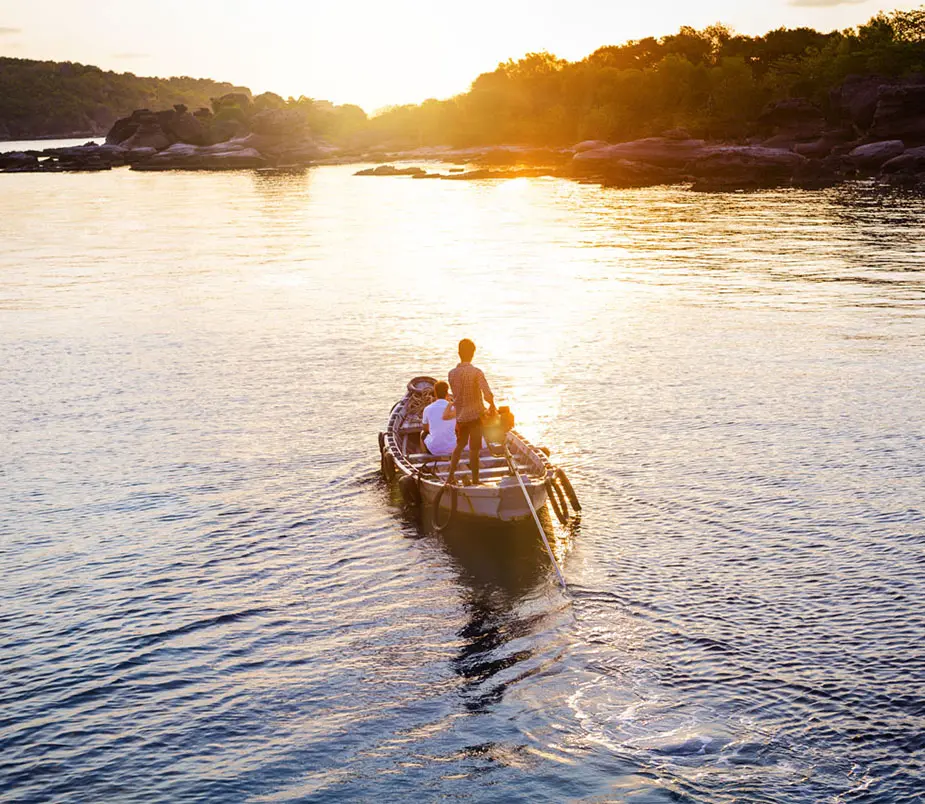
Fishing is one of the most popular activities around the island of Phu Quoc. Therefore, it is without a doubt something you need to experience during your stay here. Night squid fishing tours are awesome as you get to hop on a local squid boat and learn the secrets of catching fish; an activity turned into art by these skilled locals. As you are on-board a fisherman’s boat, you have the unique opportunity to watch the sunset in the Gulf of Thailand, which is simply arresting, and feel the peacefulness and serenity that comes along with this venture.
South Phu Quoc Tour
Each part of this beautiful island has its own charms and attractions. Going on a South side of the island tour will allow you to visit places such as the Coconut Prison, where prisoners of war were incarcerated and brutally tortured, and Sim Winery and learn more about the island’s pearl harvesting activities. Visiting a peal factory in the south will give you much more insight about this matter and also get you inside the world of jewelry designing, with pearls having the leading role. You may also stop at the magnificent Bai Sao beach, where you can soak up the sun, swim in the crystalline waters, or enjoy lunch at a local restaurant.
Note about this tour:
If you wish to visit the Tranh Stream along your way, you may do so between the months of May and October.
North Island Kayaking and Village Tour (Rach Vem)
Like living an adventure? Kayaking on the Cua Can River is your thing. Let the flavours and sights of Phu Quoc be revealed to you on a full-day excursion around the north. You can start with an exploration of the local countryside and visit the black pepper plantations, where you can learn about harvesting pepper plants (notorious local produce), among others. If you have time and fancy a visit to a bee farm to sip drinks mixed with locally-produced honey, this is your moment too. Then, make a stop along the Cua Can river and get a kayak to try your paddling skills in this mighty river. The views that will surround you are just incredible. As you paddle north, you will come across a national park perfect for hiking via a century-old forest trail. The Rach Vem village is not far, and you can have that delicious meal you have been thinking of for a while. Or you may choose to swim with starfish and take a leisure stroll around the sandy beach first.
Phu Quoc is full of hidden treasures and opportunities to live the kind of adventure you dream of, whether this includes escaping the beaten path and trekking through unspoiled forests, stepping foot in national parks of unsurpassable natural beauty, exploring a rich underwater ecosystem, or just relaxing under the warm sun with a cocktail at hand. Your options are limitless; as will your memories be when you leave Phu Quoc.
In addition to the pretty Phu Quoc beaches, a wonderful combination of history, culture, and nature await on the island of Phu Quoc.
History buffs will enjoy visiting the French-built “Coconut Prison” in the south of the island, near the port of An Thoi, which also housed political prisoners of the South Vietnamese government in the 1960s and 1970s. Several structures have been rebuilt including jail cells, a kitchen, watchtower and escape tunnel. There is also a gallery on-site with original artifacts and graphic recreations of prison life.
Nature lovers will want to head south along Long Beach to visit the Pearl Museum and various pearl farms to see how oysters are seeded with pearls and turned into exquisite jewelry or stroll through the many pepper plantations to see one of the island’s most famous products. North of the island is the expansive Phu Quoc National Park, ideal for leisurely hikes and walks.
On the water, Phu Quoc snorkeling, diving, kayaking and island hopping tours are easily booked through your hotel or local travel agencies. Cheap day trips combining bus transport to the port of An Thoi in the island’s south with boat trips for snorkeling, lunch, a visit to a pearl farm and picturesque Bai Sao (Star Beach) which many consider the best beach in Phu Quoc, are especially popular. More exclusive boat trips can be arranged, visiting some of the pristine islands in the An Thoi archipelago to the south or the remote islands to the north, along with fishing, snorkeling and picnics on the beach. Diving in Phu Quoc is also good during the dry season.
To get off the beaten path, visitors can head up to the island’s north shore and visit the sleepy fishing village of Ganh Dau where racks of silvery fish can be seen drying in the sun while the womenfolk mend fishing nets. You can also arrange to see other Phu Quoc specialties including a small factory that makes sim wine from the fruit of the rose myrtle tree, or a camp for Phu Quoc Ridgeback dogs, native to the island, where they are trained to race and climb fences.
Vietnam is a beautiful country which offers several interesting destinations for different groups of travelers. Followings are some most recommended tourist attractions in this S-shaped country.
Halong Bay
Recognized one of new Seven Wonders of the World, Halong Bay has proved itself as a wonderful destination for Vietnam tours.
Halong Bay consists of thousands of majestic limestone islands and islets that are covered by turquoise sea water. Taking a Ha Long Bay trip, visitors will spend their time discovering the sheer beauty of narrow lagoon and grottoes while gliding on the blue ocean.
You can go aboard on tourist boats to travel around the Bay. Not only can you watch the spectacular limestone and caves, you can also visit some floating villages such as Cua Van, Vung Vieng, and Cong Dam to see the life of people there. For more luxury trips, there are high-end cruises available for overnight tours on the Bay. You may catch the glorious sunset on the sea or watch the sparkling night sky while getting served with best services. Also, it is interesting to go kayaking around the Bay. With its significant geological value, Halong Bay has been listed as UNESCO World Natural Heritage for two times.
Hanoi
Of course, Hanoi – the capital of Vietnam cannot be missed in any Northern Vietnam destination lists. The beautiful and peaceful city with a thousand years of history possesses alluring beauty which has been highly appreciated by both local and foreign tourists.
The thousand-year capital of Vietnam still well preserve some tangible and intangible value of a nation with long-lasting history. Here exists the Imperial Citadel of Thang Long – the social and political center of Vietnam under Ly, Le, and Tran Dynasties. It was also where French Government worked during their conquest of Vietnam. Hence, travelers can see the cluster of Eastern and Western Cultures, especially through architecture here. Next to the citadel stands the mausoleum of Uncle Ho – the great leader of the country during Vietnam War, who has also inspired millions of people all over the world. Some famous relics like Hanoi Flag Tower, North Gate and D67 Tunnel and House are also situated in this area.
There are many other worth-visiting places to explore in Hanoi such as Hanoi Old Quarter, Hoan Kiem Lake, Temple of Literature, West Lake, and Duong Lam ancient village, where you can approach Hanoi’s culture and daily lives. Especially, the specialties in Hanoi Old Quarter will definitely amaze you.
Sapa
Located in the mountainous Northwest of Vietnam, Sapa is perhaps the most haunted destination for adventurous trips in northern Vietnam. The exquisite scene of the natural settings with dense jungle and the colorful rice terraces is an undeniable allure to travelers. Sapa is also home to many ethnic minority groups such as H’Mong, Tay, Dao, and Thai. Coming to Sapa, travelers can discover the incredibly beautiful landscapes as well as the culture of the tribal people. Visitors can try on the colorful traditional clothes, do farming in terraced rice fields, or participate in Bac Ha traditional market. Additionally, they can pay a visit to Fansipan Peak – the summit of Indochina at the height of 3143 meters, coming across jungles and climb up the mountain to get a unique wilderness experience while taking a bird’s eye view of the whole area.
Not only does Sapa displays Vietnamese’s culture, the small town also shows the influences of the West. Travelling around Sapa town, visitors can easily find French-style villas and homes, as well as some modern public buildings.
Ha Giang
With rugged mountains, spectacular terrace fields, deep valleys, and dense forests, Ha Giang is an ideal place for northern Vietnam tours.
The majestic landscapes flanked by high mountains (Tay Con Linh and Kieu Lien Thi), mighty rivers (Lo and Mein Rivers) and detailed with waterfalls, valleys, forests, and distinct limestone formations have made Ha Giang an irresistible destination for nature lovers. The province offers spectacular views that are exceptionally suitable for the intrepid escapade. Paying a visit to Ha Giang will enable travelers to experience as a local. You can stay with local people and trek through colorful terraced rice fields and villages of the ethnic minority in most isolated areas, where has not been influenced by mass tourism.
Some must-stop tourist attractions in Ha Giang are Dong Van Rocky Plateau Geopark, the Palace of Vuong Family, Lung Cu Peak, Meo Vac, Khau Lai Love Market, Quan Ba Valley, and Happiness Road.
Ninh Binh
Located just about 3 hours driving from Hanoi, Ninh Binh Province is famous for its spectacular landscapes and cultural values. Trang An Landscape Complex has been recognized as the World’s Cultural and Natural Heritage. With marvelous limestone peaks and caves surrounded by rice paddies, Trang An is one of the best destinations in Vietnam for foreign travelers.
In addition to tranquil landscapes, Trang An has high cultural values. Caves’ archaeological deposits represent human occupation and utilization lasting for more than 30,000 years. There also stands Hoa Lu Citadel – the capital of Vietnam under Dinh Dynasty. Many historical vestiges still remain today. Moreover, Bai Dinh Pagoda, the biggest Buddhist temple in Southeast Asia with many world and regional records, is situated in this beautiful province.
To explore the beauty of Ninh Binh travelers can pay a visit to Trang An, Tam Coc – Bich Dong, Bai Dinh pagoda, Hoa Lu Citadel, etc. These attractions are located closely and will offer you unforgettable experiences.
Quang Binh
Quang Binh is favored with marvelous landscapes. Phong Nha – Ke Bang National Park is a renowned tourist attraction recognized by UNESCO as the World Natural Heritage. The complex of Phong Nha – Ke Bang consists of several marvelous caves and grottoes with fantastic stalactites and stalagmites such as Phong Nha, Tien Son, Toi, Thien Duong, and Thuy Cung. Son Doong – the world’s largest cave is also located in this region. With mysterious scenery insides, the caves and grottoes have attracted a huge number of local as well as foreign tourists. Quang Binh is also home to famous beaches such as Da Nhay and Nhat Le beaches – which are perfect for summer escape.
Additionally, Quang Binh includes several historical and cultural relics such as Hoang Phuc pagoda, Dao Duy Tu rampart, and Dong Hoi citadel. The cultural archaeological site of Bau Tro, Phu Luu bronze Drum, which existed in the same era as Dong Son Drum is also found in this province.
Hue
Once the capital of Vietnam during Nguyen Dynasty, Hue remains its ancient looks and loyal customs. The complex of Hue Citadel and the Imperial Court Music have been recognized as UNESCO World Cultural Heritage. The complex consists of the Imperial Citadel of Hue, royal tombs, and monuments of Nguyen dynasties such as Tu Duc, Minh Mang, and Khai Dinh. Moreover, Hue is the city of pagodas and temples. The most famous pagoda is called Thien Mu pagoda nestled to the north of the poetic Perfume River.
Cuisine and costume are also the attractions of Hue. Visitors may have chances to sample the special delicacies in Hue and buy home some specialties as souvenirs such as Me Xung and Tom Chua. More interestingly, you might catch the sight of Hue’s girls in their traditional “Ao Dai” and “Non Bai Tho” who are cycling their bikes on their ways to school. The tranquil and peaceful atmosphere of Hue will definitely leave visitors in awe!
Da Nang
Da Nang is a dynamic city in Central Vietnam. The city is renowned for its modern lifestyle, cleanliness, and safety. Da Nang is among the most popular destinations in Vietnam thanks to its richness in natural landscapes as well as cultural values. Non Nuoc Beach in Da Nang is listed one of the most beautiful seashores in the world, which is indubitably suitable for swimming and sunbathing. Marble Mountains – the five limestone hills named after five elements of the ancient oriental philosophy, which are metal, wood, water, fire, and earth, is another attractive place to visit. These mountains are also home to several temples and pagodas in mysterious caves.
Ba Na Hills – an amusement complex in Truong Son Mountain Range is a must-stop destination in the city. It used to be a resort founded by French colonizers in early 20th century with more than 200 Western-style villas, but only a few of them remains today. Ba Na attracts travelers with dense rainforests, waterfalls, and its bio-ecological diversity. Additionally, a notable attraction in Ba Na is the Southeast Asian’s biggest indoor amusement center. The Fantasy Park opens a lively and attractive entertainment world with many fascinating games for all ages. Also, Ba Na consists of many alluring places such as Le Jardin D’Amour Flower Garden, Debay Wine Cellar, Linh Ung Pagoda, and French Village.
Hoi An
Once the major trading port of Asia, the ancient town of Hoi An is the place where visitors can discover the long-lasting culture of Asia in general and Vietnam in particular. The foreigners came from all corners of the world but most of them were from China and Japan. Many have settled in permanently and etched their marks into the history of Hoi An.
A tour to Hoi An will offer you an enlightening journey to the past. The well-preserved hundred-year-old houses and buildings enable travelers to take a closer look at the influences of Chinese, Japanese, French, and Spanish cultures in the region. Also, it is great to explore the cluster of different cultures via Hoi An festivals and cuisine. Taking a boat alongside the Thu Bon River, visiting significant historic vestiges, watching the colorful lanterns at night, or catering to the flocks of tourists on its narrow streets to sample the foods would bring about unforgettable moments.
Nha Trang
Nha Trang consists of one of the most famous Vietnamese seashores which has been listed as one of the best beaches in the world. Located in Southern Vietnam, Nha Trang is a dynamic city which stands by the sea. The city has several stunning white-sand beaches such as City Beach and Hon Chong Chenh. Not only can travelers dive into the cool turquoise sea water, sunbathe in the long sandbank, they can also participate in modern water sports such as wakeboarding, kite surfing, and banana boat rides. What’s more, in Hon Chong Chenh beach stands a rock formation that stretches towards the sea, which is an ideal place to take photos.
Mui Ne
Recently Mui Ne has attracted huge attraction from tourists thanks to its marvelous beaches and sand dunes. There exist enormous white and golden sand dunes sloping gently to the ocean – the exquisite scenery of natural settings that is rarely seen in tropical countries. It is regarded as “the little Sahara desert” of Vietnam.
Additional to swimming and participating in water sports, travelers can have some other interesting outdoor activities in the dunes such as kite-flying, jeep-driving, and sled-riding. Also, watching the glorious sunset with lovers on the sand dunes is an exceptionally romantic experience.
Ho Chi Minh City
Regarded as the Pearl of the Orient, Ho Chi Minh City (also called “Saigon”) was the center of economics and entertainment of Indochina. It was named after the great leader of Vietnam during the Vietnam War. Modern skyscrapers amidst Oriental-style pagodas and significant relics create a dynamic urban area in a very special sense.
The architecture, along with the lifestyle of Saigon, is the reconciliation between American and Chinese influences, with many dots of modernity yet without losing traditional traits. The Independence Palace, which marks the reunification of the North and the South in 1975 and the end of Vietnam War, is a must-visit destination. Other relics such as Cu Chi tunnels, Dragon House Wharf, and Notre Dame Cathedral are also amazing to explore.
Mekong Delta
Nestled in the southernmost of the country, Vietnam’s Mekong Delta is considered the country’s breadbasket. This region provides more than half of Vietnam’s rice. It is also the land of tropical fruits.
Coming to Mekong Delta, travelers can take on a boat gliding along Mekong River to come across enormous rice paddies and explore the life of friendly Southern people. You can also take time to visit the floating markets such as Cai Rang and Phong Dien to buy fresh flowers and fruits, or to listen to “Don Ca Tai Tu” – Southern Vietnam’s traditional music.
Phu Quoc Island
Nestled in the Gulf of Thailand, Phu Quoc – the biggest island in Vietnam has been increasingly popular with travelers. Phu Quoc Island is famous for its big tropical forests, beautiful white sand beaches, and colorful coral reefs. The island remains intact from human’s influences as more than 70% of it belongs to Phu Quoc National Reservation Park. Here travelers can spend your holidays on exploring the forests, the blue-green sea, or visiting the traditional villages.
There are many stunning beaches in Phu Quoc such as Long Beach, Thom Beach, Sao Beach, and Ong Lang Beach. Some are perfect for swimming, while some are ideal for sightseeing. These are extraordinarily suitable for honeymoon or couple tours. Also, Phu Quoc is home to some specialties such as fish sauce, pepper, and pearl. Many fish sauce factories, pepper plantations, and pearl farms are available to visit.
Plenty of hotels, resorts, restaurants, and café bars have been opened to serve the increasingly high number of both local and foreign tourists.


Find Out More
Tours in Phu Quoc
Things to do in Phu Quoc
Where to Travel in Vietnam