For generations through history, Vietnamese cuisine has woven a rich tapestry of flavours, a testament to its diverse regional influences and time-honored techniques. From the busy street markets to family kitchens, the culinary heritage of Vietnam is a story told in fresh herbs and aromatic spices.At La Veranda Resort Phú Quốc, The Peppertree restaurant takes this tradition and elevates it, crafting a menu that honors the authentic spirit of Vietnamese gastronomy while introducing a refined layer of artistry.
Why You Should Visit The Peppertree for an Elevated Dining Experience in Phú Quốc
The Peppertree, a fine dining restaurant in Vietnam, offers a unique dining experience, blending classic techniques with the fresh, local ingredients of Vietnam. This fusion creates a symphony of flavours that is both familiar and exciting, offering a truly memorable culinary journey.Whether you’re a seasoned connoisseur of fine dining gastronomy, or you’re simply looking to explore new tastes, The Peppertree promises an unforgettable dining experience.At The Peppertree, this culinary heritage is celebrated and elevated, offering guests a taste of this masterful fusion…
Elegant Dining Ambiance: The Perfect Setting for Memorable Meals
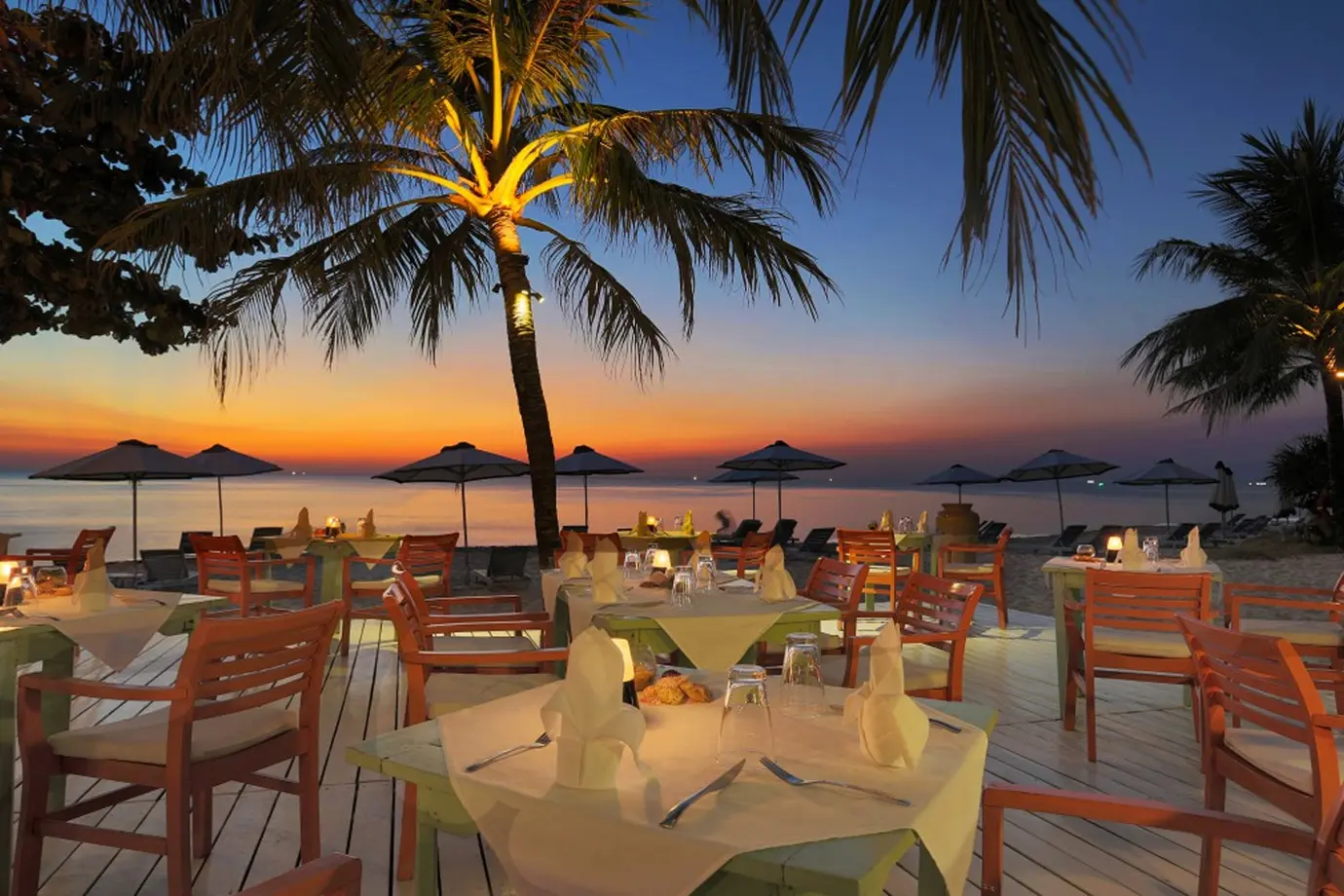
The Peppertree provides an elegant and refined atmosphere, perfect for a romantic dinner, a special occasion, or simply a memorable meal.The restaurant’s design is inspired by a traditional Vietnamese stilt house, offering stunning ocean views and a sense of tranquillity.The combination of exquisite food, impeccable service, and breathtaking scenery makes The Peppertree the finest destination for fine dining in Phu Quoc.Imagine savouring delectable cuisine in Phú Quốc while overlooking the turquoise waters of the Gulf of Thailand. The gentle sea breeze, the sound of the waves, and the vibrant colours of the sunset create an ambience that is both relaxing and enchanting. This is the magic of The Peppertree, where every detail is designed to enhance your dining experience…
A Taste of Our Inspired Signature Dishes
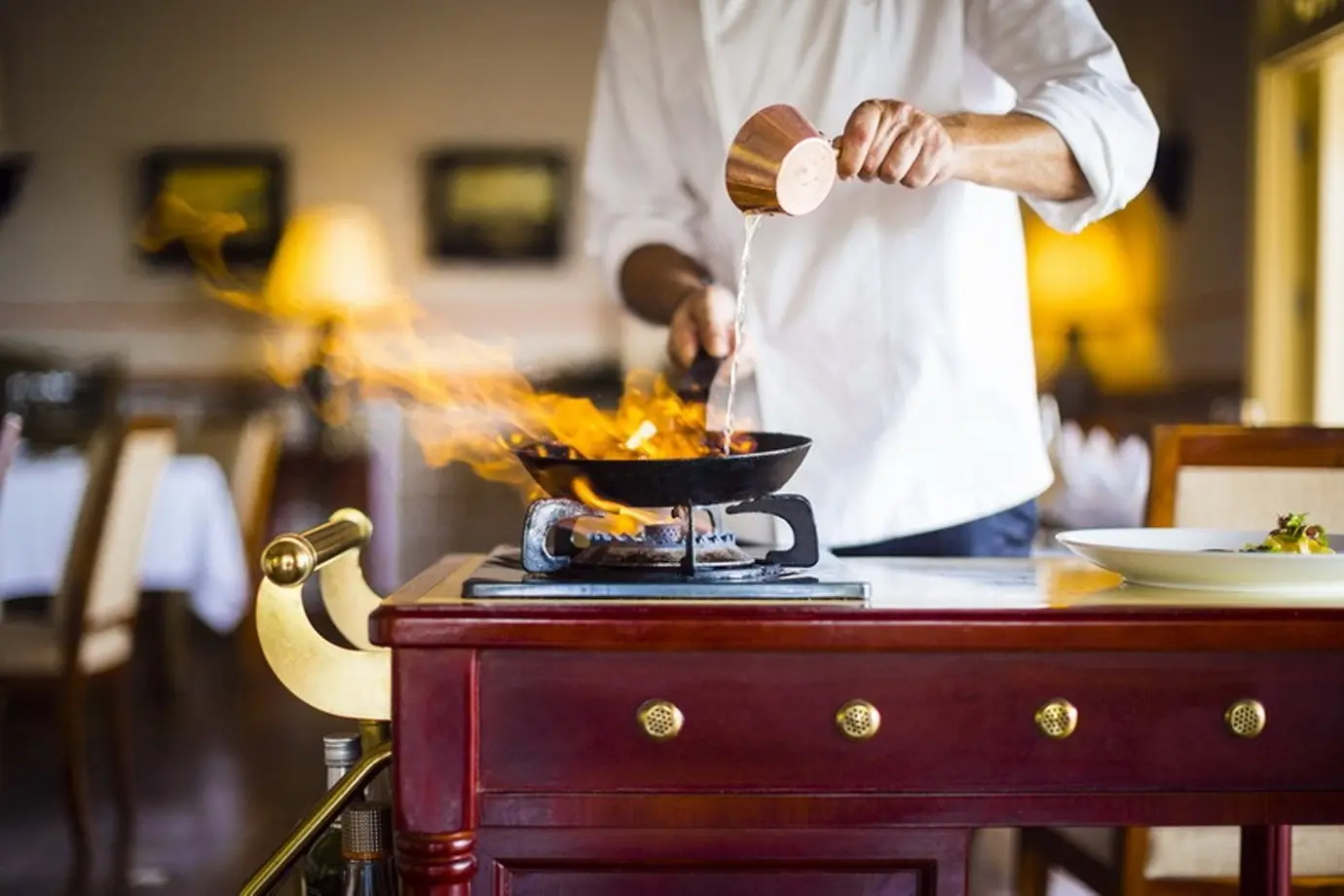
The Peppertree’s menu is a testament to the culinary creativity of its chefs. A wide selection of classic dishes have been given a unique Vietnamese twist. From fresh seafood platters, to succulent meat dishes, every item on the menu at our fine dining restaurant in Phú Quốc is crafted with precision and passion.For a taste of the sea, try the Ca Hong Nuong (Whole Red Snapper grilled in Banana Leaf Papillote with Lemongrass) or the Tom Xao Sot Me (Pan Fried King Prawns tossed in a Tamarind & Phú Quốc Honey Sauce).If you prefer meat, the Bo Luc Lac (Australian Wagyu Rump stir-fried with Tomato, Cucumber, Bell Pepper and Onion) or the Cha Gio Chien (Deep Fried Pork, Jicama and Mushroom Rice Paper Rolls, Herb Salad, Sweet and Sour Fish Sauce) are excellent choices.As for dessert, the Riz Au Coco (Rich Coconut Rice Pudding, Fresh Mango, Coconut Meringue, Mango Sorbet) or Bombe Nougat Glace (Frozen Nougat Mousse with Candied & Semi-Dry Tropical Fruit, Cashew & Almond Nougatine, Meringue, Dark Rum) both offer a sweet and satisfying end to your meal.
Breakfast and Dinner: What to Expect at The Peppertree
The Peppertree is open for both breakfast and dinner, offering a diverse culinary experience throughout the day.
Breakfast (6:30am – 10:30am weekdays, 6:30am – 11:00am weekends): Start your day with a delicious breakfast spread featuring both continental and Vietnamese options. Enjoy freshly baked pastries, tropical fruits, and made-to-order egg dishes while taking in the morning ocean views.
Dinner (6:00pm – 10:00pm): In the evening, The Peppertree transforms into an elegant dining destination.The menu showcases the best of fine dining in Phu Quoc, offering a culinary journey that will tantalise your taste buds.
An Award-Winning Culinary Team
The Peppertree is led by a team of talented chefs and was crowned the Best Luxury Resort Boutique Restaurant by Luxury Lifestyle Awards 2024. You can learn more aboutour culinary team and their dedication to crafting an exceptional fine dining menu in Phú Quốc on our website.
Making the Most of Your Visit: Tips for Dining at The Peppertree
To ensure you have the best possible experience at The Peppertree, we recommend making a reservation in advance, especially during peak season. This will guarantee you a table and allow you to fully enjoy your dining experience without any worries.When planning your visit, consider the time of day. For the best views, dinner time offers a spectacular sunset backdrop. However, breakfast at The Peppertree is also a delightful experience, offering a tranquil start to your day.No matter when you choose to visit, The Peppertree promises an unforgettable culinary journey. With its exquisite cuisine, elegant ambience, and stunning ocean views, it’s a must-visitfine dining restaurant in Phú Quốc.Book your table today and experience the magic of The Peppertree for yourself!
Array
Find Out More
Embassies & Consulates
Regarding countries with no visa exemption agreements with Vietnam, travelers have to contact the Vietnam Embassies or Consulates in their countries to register or extend the visa. And of course, for those with exemption agreements, their citizens do not need to get a visa to travel to Vietnam. They are allow to enter Vietnam for a certain time, depending on the agreements. (fabulouseyebrowthreading.com) The visa-exempted nations are as follows:
Country
Days
Laos, Cambodia, Thailand, Singapore, Indonesia, Malaysia
30
Philippines
21
Japan, South Korea, Russia, Sweden, Finland, Denmark, Norway, Germany, France, Spain, Italy, the UK
15
Myanmar, Brunei
14
When you have arrived in Vietnam already, if any problems occur, you should contact you country’s embassies and consulates in Vietnam to ask for support. There are 80 embassies in Hanoi, and 58 consulates and 3 representations in other cities.
Followings are the lists and contacts of the Embassies and Consulates in Vietnam.
American Embassy
The American Center 1 st Floor, Rose Garden Tower, 170 Ngoc Khanh Street
HN
844-3850-5000
http://vietnam.usembassy.gov/
Argentinian Embassy
360 Kim Ma Street, Daeha Business Centre, BA Dinh District
HN
84438315262 / 38315263
http://www.embargentina.org.vn
Australian Consulate
5th Floor, The Landmark Building, 5B Ton Duc Thang, District 1
HCM
84-8 3521 8100
http://www.hcmc.vietnam.embassy.gov.au/
Australian Embassy
8 Dao Tan Street, Ba Dinh District
HN
84-4 3774 0100
http://www.vietnam.embassy.gov.au/
Austrian Embassy
Prime Center, 53 Quang Trung, 8. Floor, Hai Ba Trung District
HN
84/4 3943 3050-3/3943 3051
http://www.aussenministerium.at/hanoi
Bangladeshi Embassy
Villa # D6B-05, Vuon Dao, Compound, Subway #675, Lac Long Quan Road, Tay Ho District
HN
84-4-3771-6625,/3771-7829
Belarusian Embassy
To Ngoc Van Road, 66, Tay Ho District
HN
84 4 37 19 29 74
http://www.vietnam.belembassy.org/
Belgian Embassy
Ha Noi tower, 9th floor, 49 Hai Ba Trung, Hoan Kiem District
HN
84 4 3 934.61.77/7884 4 3 934.61.79/80/81
http://www.diplomatie.be/hanoi
Brazilian Embassy
14, THUY KHUE STREET – villa D-6/7, Tay Ho District
HN
844 843-0817/2544
British Embassy
31 Hai Ba Trung Street, Central Building
HN
84 4 936050084 4 9360550 / 46
www.uk-vietnam.org/
Bulgarian Embassy
5 Nui Truc Str, Van Phuc, PO Box 10
HN
84 4 38-45-29-08
Cambodian Consulate
No. 41, Phung Khac Khoan
HCM
848 829 2751
Chinese Consulate General
39 Nguyen Thi Minh Khai Street, District 1
HCM
848-8292457
Chinese Embassy
46 Hoang Dieu Road
HN
844 8453736
http://vn.china-embassy.org/eng/
Consulate General of Canada
9th Floor, The Metropolitan, 235 Dong Khoi Street, District 1
HCM
011 84 8 827-9899
http://www.international.gc.ca/vietnam
Consulate General of France
27 Nguyen Thi Minh Khai, BP 307, District 1
HCM
[84] 8 35 20 68 00
www.consulfrance-hcm.org/
Consulate General of Indonesia
1 8, Phung Khac Khoan Street, D 1
HCM
84-8 825-1888, 825-1889
Consulate General of Malaysia
1 208 Me Linh Point Tower, No. 2, Ngo Duc Ke Street, District 1
HCM
84-8-829 9023
www.kln.gov.my/perwakilan/hochiminh
Consulate General of the Federal Republic of Germany
1 26 Nguyen Dinh Chieu, District 3
HCM
84 8 38 29 19 67
www.ho-chi-minh-stadt.diplo.de/
Consulate General of the Lao PDR
93 Pasteur St, District l
HCM
84 8 829-7667or 829-9275
Consulate General of the Lao PDR
1 2 Tran Quy Cap
Danang
84 51 821-208
Consulate General of the Netherlands
Saigon Tower, suite 901, 29 Le Duan Boulevard, District 1
HCM
84 8 8235932/33
www. mfa.nl/hcm-en
Consulate General of the Philippines
40-5 Pham Viet Chanh St., Ward 1 9, Binh Thanh District
HCM
84 8 3518 0045
There are two ways to get to Phu Quoc: by sea and by air.
Domestically, flights to Phu Quoc are available from many cities in Vietnam including Ho Chi Minh City (45-minute flight), Hanoi, Rach Gia and Can Tho via Vietnam Airlines (the national carrier) and several budget airlines: Jetstar Pacific, Vietjet air and Vasco (a subsidiary of Vietnam Airlines).
In peak season, there can be as many as 15-20 daily domestic flights to Phu Quoc, but it is advisable to book early to avoid disappointment as flights to Phu Quoc can sell out during the high season of December to April. From Phu Quoc International Airport, visitors can travel the 9 km to the main town of Duong Dong by taxi, motorbike or hotel transfer.
Internationally, there are direct flights to and from Phu Quoc from Siem Reap, Cambodia and Singapore via Vietnam Airlines with more routes being added all the time.
Best of all, because Phu Quoc is classified as a Special Economic Zone, visitors of all nationalities flying in / out of Phu Quoc only (and not visiting the Vietnamese mainland) are granted a visa exemption to stay up to 30 days. Please check with the Vietnamese embassy or consulate in your country for additional requirements including having a passport valid for at least 6 months beyond your stay and a round-trip ticket to / from Phu Quoc.
Alternately, getting to Phu Quoc by ferry is cheap and easy. Ferries leave from the coastal towns of Rach Gia or Ha Tien on the Vietnamese mainland. If traveling from Cambodia, Ha Tien is easily accessible from the seaside resort towns of Kep (25 km) and Kampot (66 km).
There are a few ferry companies including Superdong, Duong Dong Express and Ngoc Thanh, with Superdong offering the most reliable service, providing one morning and one afternoon departure from Rach Gia for the 2.5 hour journey and four daily departures from Ha Tien for the 1.5 hour trip. There is also a slow ferry from Ha Tien to Phu Quoc operated by Thanh Thoi for those traveling with cars. Ferry tickets can be easily bought through your hotel, at travel agencies or at the ferry dock.
The best time to travel by ferry is from late October to May when the weather in Phu Quoc is dry and the seas are calmer. During the wet / monsoon season (June to September), ferries are still scheduled to run daily but inclement weather may make for rough seas or cancellations.
Most fast and slow ferries will take you to Bai Vong Port on Phu Quoc, close to Long Beach. From there to the main town of Duong Dong, there are multiple transportation options, including motorcycle taxis (each able to carry one passenger with minimal luggage), taxis and shared mini-buses.
Adventurous and developing, this narrow country between the Cambodia and Laos borders, definitely impresses myriad different ways. With profound natural beauty, characterized by forested mountains, pristine beaches, scenic valleys, lush rice terraces, charming karst formations on the north, and a fertile delta on the south, Vietnam has the power to inspire awe.
Despite its struggles, being ruled for nearly a millennia by many different Chinese dynasties before it became a French Protectorate in the 1800s and prior to experiencing a brutal and fierce war, it now stands proudly and switches gears into becoming a rapidly developing nation. The places to visit in advancing Vietnam are, literally, endless. But, if one had to pick just a handful of them, these would be:
Duong Dong
Duong Dong is one of the most developed cities in Vietnam and the main town on Phu Quoc Island, also known as Pearl Island, ready to offer holidaymakers a VIP experience if only they ask for it. Often called “the heaven on earth” Phu Quoc is home to unimaginable beauty, characterised by sugary beaches, pristine shores, incredible views of the ocean, a rich marine life, crystalline waters, cloudless skies, and jungle-like forests; and Duong Dong is the embodiment of all this allure.
Staying here comes with several benefits, as you have the opportunity to live life like a local and, at the same time, enjoy modern comforts. For that reason, you will find luxury resorts like La Veranda, whose high-end facilities, conveniences, spellbinding panoramas, and proximity to the main attractions, such as the Cau Temple, the Duong Dong night market, and award-winning restaurants, make it one of the most favourite beachside hotels among individuals, couples, and families that satisfy with nothing but absolute splendour.
Dalat
Dalat is a city that many French colonials and Vietnamese emperors used as a summer retreat. Can you blame them? Colourful flowers everywhere, verdant land, beautiful French colonial architecture, the scent of pine trees swirling in the air, and misty valleys treating the eyes of every weary traveler can make anybody fall in love with the place. Conveniently situated in the South Central Highlands of the country, it is a great escape for those in search of a refreshing area to chill out and cool off while pampering themselves with mind-blowing vistas.
My Son
If you love visiting sites of archaeological interest, then My Son will tick all of your boxes. Nicely tucked near Duy Phu village on the central coast of Vietnam, it is one of the most significant ancient sites that speaks of a glorious past. My Son was once a religious centre for Hindu ceremonies and attracted the attention of the king of the Champa Kingdom, who built temples here to honour Shiva, one of the three chief divinities of the Hindu Triad, between the 4th century and the 1300s.
Ho Chi Minh City
Nestled near the Mekong Delta along the Saigon River, Ho Chi Minh City occupies a special place in southern Vietnam. Previously referred to as Saigon, it used to be the centre of administration during the Vietnam War. Over the years, it took its place as the largest city of the country, giving tourists and Vietnamese alike many reasons to step foot on its land as it combines the modern and the traditional lifestyle so harmoniously, offering from a vibrant night scene to historical attractions.
Kon Tum
The north of Vietnam is not as developed as the southern regions, but places like Kon Tum make it worth exploring. Situated along the Dakbla River up in the central highlands of the country, Kon Tum is a spirited town following a more laid-back way of living. This quiet and peaceful green dot on the map is not widely known among tourists, which enables those that wish to soak in the local culture to experience exactly that.
Mekong Delta
Nicknamed Vietnam’s Rice Basket, The Mekong Delta is a pole of attraction for its fertile land and the labyrinth-like streams and canals that feed it. This sheer agricultural region extends from Ho Chi Minh City and goes all the way to the Gulf of Thailand, providing food via its rich rice paddies, plantations, and fish farms to more than 30% of the country. Besides rice paddies and floating markets, the Mekong Delta is also home to bird sanctuaries, sugar cane groves, fruit orchards, and Instagram-perfect fishing villages.
Nha Trang
The main draw of this lovely seaside resort town is its beach which is surrounded by a heart-stopping promenade, palm trees, hot springs, and beautiful resorts. Found off the coast of South-Central Vietnam, it features one of the most mind-blowing bays in the country and diverse marine life, along with pictorial mountain ranges, sandy beaches, a mesmerising sea bed, water parks, healthy reefs, and gorgeous seascapes. The coastal town is full of Catholic churches, Champa Kingdom temples and architecture, and Vietnamese eateries. No wonder it is so favoured by tourists and scuba divers that flock from all over the country (if not the world) to explore its beauties.
Sapa
Between rice terraces and rolling hills lies Sapa, a picturesque town in the remote northwest of the country. This isolated, quiet place is surrounded by a wide range of mountain tribes that makes a perfect starting point for trekking enthusiasts, who hike up the imposing Hoang Lien Son Mountains or tour traditional villages and rice paddies that come in abundance around here. On their way, they go past majestic waterfalls while also being provided with the chance to learn the local way of life, taste traditional Vietnamese food, and familiarise themselves with local customs.
Hue
Central Vietnam hides a gem called Hue whose citadel is an attraction on its own as it comprises of magnificent gates, palaces of incredible grandeur, and temples so elaborate that they create an unpretentious feeling of astonishment. The town that once served as the imperial capital of the Nguyen Dynasty and seat of Nguyen emperors sits on the banks of Perfume River, narrating its glorious past through every aspect of its being, from the cuisine and culture to architecture. Its official symbol is the Thien Mu Pagoda; another sight for sore eyes.
Hoi An
A few kilometres off the coast of the South China Sea, the old city of Hoi An is already living through its second millennia. Tracking it back to the Champa Kingdom, some 2,000 years ago, the south-central town is a popular destination among people looking for relaxed, unique experiences infused with a local flair. Tourists love strolling the atmospheric Old Town in the heart of the city with the maze-like streets. Adorned with beautiful architecture and offering the opportunity to taste traditional flavours and go shopping, Hoi An knows how to please the discerning tourist.
Ha Noi
One of its most prominent landmarks is the open-air museum of historic French colonial and Asian architecture, namely Old Quarter, which stood the test of time almost in its entirety despite the Vietnam Wars and the bombings that threatened its existence. Those that have been here admitted feeling enchanted by the overall paradisiac sensation, with the cosy cafes, charming markets, and striking tree-lined boulevards. Don’t leave without visiting the Saint Joseph Cathedral, Presidential Palace, and the Grand Opera House!
Ha Long Bay
With limestone rock formations emerging from the sea like mythical monsters, and waters so clear and cobalt that become one with the sky, Ha Long Bay seems like a place that has popped out of a fairy tale. As you look around, you will be able to see the overwhelming natural beauty of a landscape dotted with lakes, hundreds of lush forest-covered islands carved by the hand of Mother Nature, and fascinating caves. A fantastic speck of land indeed, some 130 kilometres east of Hanoi!
Vung Tau
If you are like the majority of people flocking this town, you will catch a hydrofoil boat from Ho Chi Minh City and head to Vung Tau for a short, relaxing break. You can spend carefree holidays while exploring the peninsula stretching around Vung Tau, enjoying your cocktail at a local bar, and pampering yourself with some Vietnamese delicacies while the little ones run around the shore having fun. This lovely town that once was colonised by the French is now a favourite weekend destination worth stopping by.
Haiphong
Unlike its neighbouring cities, Haiphong is an industrial town experiencing profound growth in the last few years. Nevertheless, it still amazes with its colonial architecture and unique features that make it stand out against other industrial cities of the north. Strolling its streets will enable you to view the fantastic flame flower trees along every road. Walk a bit more up the Halong Bay, and you will be rewarded with cinematic views, a sandy beach ready to offer you unique moments of composure, and streets lined with spectacular shrines, temples, and pagodas.
Ha Giang
Most people visiting Ha Giang feel as if they have made a trip back in time. Being one of the lesser touristy cities of the North, sitting comfortably in the banks of Lo River, Ha Giang has a mystical vibe. Be it the mysterious mountains encircling it, the sweeping valleys that many ethnic minorities call home, the winding hills all around, or the lively markets that are packed with sellers offering handmade goods, fresh food, and animals every Sunday, one thing is for sure. Ha Giang’s cultural heritage and allure are unsurpassable.
Cao Bang
Verdant hills occupied by different ethnic tribes, jetting waterfalls whose waters meet with the swirling Bang Giang River, and blooming valleys consist the backdrop of this beautiful part of Vietnam. Here, you will see women coming from small nearby villages to sell their fresh produce in the local markets of this pastoral paradise.
Dong Hoi
Somewhere between south and north Vietnam is Dong Hoi, a city that has suffered a great deal during the war with the USA. It was nearly destroyed and then rebuilt to become a prestigious destination along the coast that attracts hundreds and thousands of tourists that love it for its fine-sand beach, crystal clear waters, and enchanting underwater ecosystem. Over the years, it has seen its seashores occupied with more and more small hotels and restaurants offering delicious seafood. Those that visit Dong Hoi also adore it for the long list of adventurous endeavours they can try in the surrounding areas, exploring the mystical Phong Nha Cave networks being one of them.
Can Tho
Can Tho is famous for its floating markets, where one can find a plethora of merchants (even coming from the connecting Mekong Delta) trading goods, including food, on the convergence of the Hau and Can Tho rivers, which basically feed this city one way or another. Some locals like to call this town the rice bowl of Vietnam. Can you blame them? The fish, rice, and fresh veggies that comprise the raw materials of the town’s restaurants are all traded through the city. This means that if something is guaranteed around here is that you will treat your palate with mouth-watering tastes. As for the evenings, the idyllic sunsets and star-lit sky turn this place into a dreamland that hosts friendly locals and guests that enjoy relaxed vibes.
Hue
Another town that was once Vietnam’s imperial capital and home to the governing class. Unfortunately, most parts of its radiant Imperial Palace was completely damaged during the war with America. The remaining ruins are reminders of a once glorious city (though some sections of the palace are still intact) and attract the interest of history fans who make a stop here and explore the area, which also encloses tombs the emperors had self-built and some excellent dining facilities alongside the Perfume River.
Wherever you look, you will find cities crammed full of colonial architecture, creativity, and culture with great appeal and magnetism. Depending on what you wish to experience coming in Vietnam, there will always be a town to meet your unique requirements, from bustling, motorbike-filled hubs to towns with historical heritage, sparkling beaches, exclusive resorts, winding waterways, lush greenery, or floating markets. And, as they continue to push into the future, they will surely have lots more to impress the world with.


Find Out More
Embassies & Consulates
How to go to Phu Quoc
Cities to visit in Vietnam