Vietnam has become an increasingly appealing destination for travellers seeking rest, balance, and quiet indulgence. From its gentle pace of life to its deep-rooted wellness traditions, the country offers a natural setting for restoration.
A spa and wellness retreat in Vietnam allows travellers to slow down, reconnect, and focus on wellbeing without distraction. On the peaceful island of Phu Quoc, this experience feels especially refined, combining natural beauty with thoughtful luxury at La Veranda Resort, where wellness unfolds in a calm and unhurried way.
Why Phu Quoc Is the Ideal Destination for a Wellness Retreat
Phu Quoc is often chosen for its beaches and relaxed island rhythm, but its appeal goes far beyond scenery. The island’s atmosphere feels naturally calming, shaped by warm sea breezes, quiet stretches of sand, and lush greenery that encourages stillness. For travellers planning a spa and wellness retreat in Vietnam, Phu Quoc offers a sense of escape without isolation.
Days here move gently, creating space for rest and reflection. Wellness experiences feel more meaningful when surrounded by nature, and the island’s unspoilt environment supports that sense of balance. Choosing a spa in Phu Quoc means enjoying treatments in a destination where calm is part of daily life, not something carefully staged.
Moments linger here, and you’ll notice how mornings feel softer, conversations slow naturally, and time stretches gently, reminding you why unhurried travel restores perspective and deepens every experience completely together.
Award-winning Spa Treatments and Holistic Therapies at La Veranda
Wellness at La Veranda is centred on restoration, balance, and inner calm rather than rigid routines. Inspired by the Vietnamese philosophy of TĨNH, a state of peaceful stillness, each experience draws on holistic approaches, natural elements, and time-honoured healing traditions. As part of a thoughtfully curated spa retreat in Vietnam, guests are invited to reconnect with their natural state of wellbeing within the serene surroundings of a luxury hotel spa.
Set between the lush forest and pristine shoreline of Phú Quốc, TĨNH Wellness Sanctuary offers a range of treatments and wellness experiences designed to nurture the mind, body, and spirit:
Traditional Massage Rituals: Full-body therapies that release tension, restore energy flow, and encourage deep physical relaxation.
Aromatherapy & Organic Spa Treatments: Treatments combining essential oils and organic ingredients to calm the senses and promote holistic healing.
Body Therapies: Exfoliating and nourishing rituals that refresh the skin and support overall balance.
Steam, Herbal & Bathing Experiences: Warm sanctuaries including steam rooms and hot–cold bathing rituals that enhance circulation and relaxation.
Each experience is delivered with quiet attentiveness and care, allowing guests to fully surrender to a journey of wellness and renewal before returning to the gentle rhythm of life at La Veranda Resort Phú Quốc.
Wellness Packages for a Rejuvenating Phu Quoc Retreat
For travellers seeking a more immersive approach, La Veranda offers thoughtfully designed journeys that extend beyond individual treatments. These experiences are shaped around balance, rest, and personal well-being, making them ideal for a longer island wellness escape focused on renewal. The resort’s wellness packages suit different intentions, from gentle relaxation to deeper restoration.
Relaxation-Focused Programs: A combination of soothing therapies designed to release tension and encourage rest.
Detox and Renewal Journeys: Treatments that support clarity and balance through gentle, considered approaches.
Multi-Day Wellness Experiences: Extended programs that allow time for gradual, meaningful rejuvenation.
Personalised Wellness Paths: Flexible options tailored to individual preferences and pace.
These packages provide structure without pressure, allowing guests to experience wellness in a way that feels natural and unforced.
Stay at La Veranda: A Luxury Resort & Spa Experience
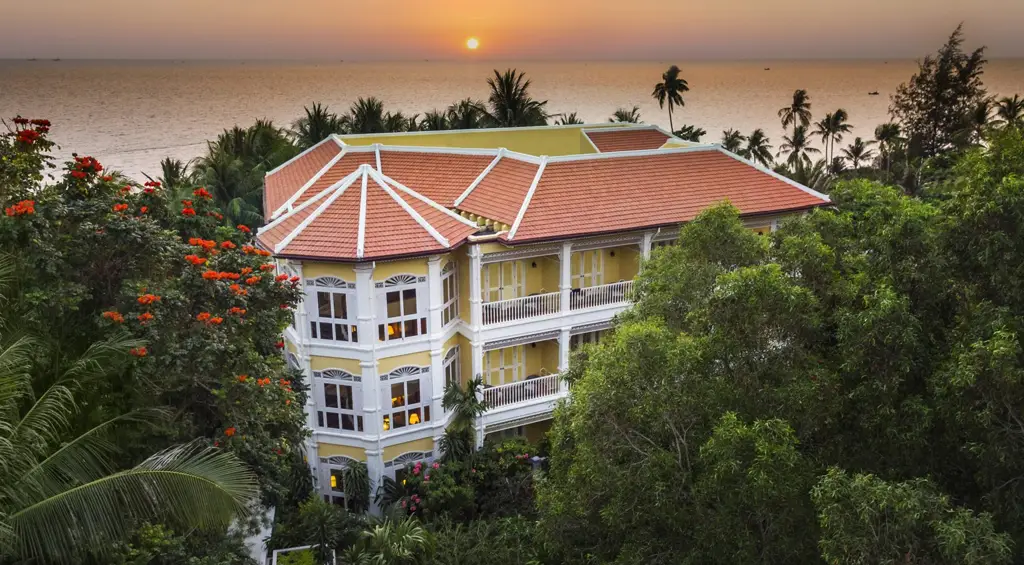
Inspired by the grandeur of a French colonial mansion, the resort’s large louvered windows open westward over a wide stretch of untouched beach and the azure waters of the Gulf of Thailand; the deep balconies, high ceilings, and period collectibles furnish 73 elegantly appointed rooms that transport you to a bygone era when life was slower and simpler. More refined. Evoking the classic charms of yesteryears with whispers of Phú Quốc’s storied history, this French colonial mansion waits to embrace you with comfort and luxury as you shed the layers of the outside world and reconnect with nature’s healing energies.
Dining experiences focus on freshness and balance, complementing the overall sense of well-being. Attentive service ensures each stay feels effortless, allowing guests to remain present and relaxed. Those planning a wellness-focused holiday can explore the spa offerings or contact us to arrange a personalised experience that aligns with their travel plans.
FAQs
What spa treatments does La Veranda Resort offer?
La Veranda provides a range of massages, body therapies, aromatherapy rituals, and steam and sauna experiences, all designed to promote relaxation and balance.
What makes Phu Quoc a good destination for a spa and wellness retreat?
Phu Quoc offers a calm island environment, natural beauty, and a slower pace of life, making it ideal for travellers seeking rest and restoration.
How do I book spa or wellness services at La Veranda?
Spa treatments and wellness experiences can be arranged through the resort before arrival or once you’re staying at La Veranda.
Array
Find Out More
History of Vietnam
Vietnam’s history is so redolent and profoundly rich as anywhere in this world. Going back many centuries, way before the American War in Vietnam monopolised the attention of the people of the West, the country was struggling to, well, stay alive and, if possible, thrive. Being the object of desire for the Mongols, the Chams, the Khmers, and the Chinese the Vietnamese did manage to shape a civilisation that rivals in sophistication that of their powerful neighbours in the north, China, from which they were significantly influenced after almost a millennium under their ruling.Then came the French, and Vietnam barely survived the colonialism period. The Americans were the last ones to try to gain lordship over them in the second half of the 20th century. These invaders were too pushed back and away, writing another black page in the history of this country that had to endure a horrible and unprecedentedly brutal war, some of whose atrocities are displayed at the Coconut Prison now turned into a war museum in Phu Quoc.
If you walk along the streets throughout Vietnam and pay attention to the names of the roads, you will realise that some names appear repeatedly in every town, city or village across the country. These are the names of national heroes, who had helped lead the nation out of foreign invaders’ imperialistic plans and inspired forthcoming generations of patriots. In greater detail:
The Early Days of Vietnam
The Vietnamese are believed to be descendants of nomadic migrants from Indonesia and Mongols from China. Mythology places the first breaths of Vietnam somewhere in 2879 BC when Hung Vuong founded the nation. However, recent archaeological finds suggest that northern Vietnam was inhabited way before that, some 500,000 years ago while the first agricultural activity here dates back to 7000 BC!
Southern Vietnam was part of the Funan Kingdom (under Indianised Cambodian reign), called Nokor Phnom by the Khmers, from the 1st to the 6th century. It was then when the first (admittedly, elaborate) irrigation and transportation canals were created in the country, and Oc-Eo in the Mekong Delta became the principal port of Funan.
When the Champa Kindom (Hindu) emerged in the late 2nd century AD, the country received influences from the Indian culture and art. During that time, Sanskrit was adopted as a sacred language, but Champa’s desire to rule over the entire coast of Indochina eventually cost them their kingdom and were forced to squeeze themselves between the powerful Khmers to the south and the equally might Vietnamese to the north.
It did not take long before the Red River Delta was conquered by the Chinese, in the 2nd century BC, which allowed a great number of settlers, scholars, and officials to head south and “saddle” the Vietnamese with a centralised state system, which did not please local rulers, some of whom raised an army and led a revolt that resulted in the Chinese governor making a quick exit in 40 AD. Three years later, though, the Chinese counterattacked and strangled every rebellion against them from the 3rd to the 6th century, imposing tyranny and forced labour, among others.
During their ruling, Vietnam was an important opening to the sea for the Chinese and Indians alike, who both influenced Vietnam in several different ways. The Indians introduced Theravada Buddhism while the Chinese brought Mahayana Buddhism, Taoism, and Confucianism while also sharing their medical and scientific knowledge. Shortly after, Vietnam started producing its own great scholars, botanists, and doctors and was also beginning to understand the principles of building irrigation channels and dikes to help prevent flooding from the sea. All that combined contributed to the birth of paddy agriculture and farming rice. But, Vietnam felt too small a country to the ever-growing population who had to seek new lands. With the Truong Son Mountains being an inhospitable place, their only way out was to the south.
Breaking Free From China
When the Tang Dynasty collapsed in the early 10th century, the Vietnamese saw it as an opportunity to revolt and regain their autonomy, which eventually happened after patriot Ngo Quyen pushed back the Chinese army. After a millennium under China’s reign, Vietnam was finally free and, even though the Chinese, the Cham, and the Khmer kept on launching attacks to Vietnam, they were all repelled. At the same time, Vietnam’s expansion to the south was a work in progress, enabling the Vietnamese to gradually take control of the Cham Kingdom.
Five centuries after, the Chinese regained control of Vietnam, causing a significant blow in the Vietnamese civilisation after carting off the national archives, among others. An era of slave labour and heavy taxation followed until Le Loi, a wealthy philanthropist, rallied the Vietnamese against the Chinese and declared himself Emperor after the Chinese were defeated. Slowly, but steadily, he turned Vietnam into a mighty country, even for a little while.
The Portuguese’s Impact on Vietnam
In 1516, the first Portuguese sailors and a party of Dominican missionaries stepped foot at Danang. In the decades to follow, the Vietnam-Portugal trade thrived while the Catholic Church had a profound impact on Vietnam, much greater than on any other Asian country besides the Philippines, which remained a Spanish colony for nearly four centuries.
Between the 17th and 18th century, though, Vietnam found itself in the middle of a rivalry between the rulers of the North, the Trinh Lords, who bore Dutch armaments, and the lords of the South, the Nguyen Lords, who were supported by the Portuguese and their powerful weaponry; each of them wanting to subdue one another. The latter clan won and further expanded to the south, absorbing regions of the Mekong Delta along their way.
The Fall of the Nguyen Family
A rebellion that took place in 1765 led by the Tay Son Rebels (who were controlled by the Nguyen brothers) allowed the Nguyen family to control the entire central Vietnam in less than 10 years. They also defeated the Chinese army in 1789; a victory that holds a special place in the Vietnamese history. By 1802, the country was united again for the first time in 200 years thanks to the Nguyen Lords, and Hue was the new capital. The Clan’s expansionistic policies continued, seizing areas of Lao territory, pushing into Cambodia, and clashing with Thailand to grab a share of the divided Khmer empire.
The countdown began when the French arrived in Vietnam in 1874 with military activity. They attacked Danang harbour, seized Saigon, and got an agreement that provided them with three eastern provinces of Cochinchina, which put an end to the independent state of Vietnam. However, under the French colonialism, Vietnam saw impressive public works being carried out, such as the construction of the Hanoi-Saigon railway, which was paid from the peasants who were enforced utterly heavy taxes. As expected, this devastated the economy and raised frustration (to say the least) among the Vietnamese. Between 1917 and 1944, it is said that more than 12,000 Vietnamese workers at a single rubber plantation died of malnutrition and disease (out of the 45,000 in total). Of course, all those hardships kept the fire for independence burning inside people’s hearts. And, it turned out that the communists were, in fact, the most successful anti-colonialists as they managed to channel people’s demands for more upright land distributions.
The Break Out of WWII
Vietnam escaped the ravages of Japanese occupation (Japanese troops had been sent to Vietnam when France fell to Nazi Germany) when the latter decided to leave the French administration to help their country with its daily running, which allowed the Vietnamese to go back to their normal, everyday rhythms. Unfortunately, 10 million people of North Vietnam starved to death due to famine after dikes broke causing massive floods and destroying crops, and the requisition of rice paddies by the Japanese just before WWII ended.
During this period, the USA-assisted Viet Minh and Ho Chi Minh saw the arguments between the Japanese and the French as a window to strike, which they did. After a series of events, the Japanese occupation forces in Vietnam were disarmed, and Ho Chi Minh declared its independence; but the country was in a chaotic state, being headless.
The French Return
In the meantime, the French reappeared on the scene to reclaim their so-called inheritance and were eventually allowed to regain control of Vietnam. That was, in fact, was a strategic move on behalf of the Vietnamese, who feared the ruling of the Chinese and allowed the French to maintain control for a specified amount of time. In return, they asked Vietnam to be recognised as a free state within the French Union. All went relatively well until the French made the mistake to attack Haiphong and kill hundreds of civilians, which sparked the France-Vietnam war. Despite the massive aid they received from the Americans, the French did not manage to take administrative control of Vietnam and eventually admitted defeat, after losing tens of thousands of soldiers. The conflict ended with the Geneva Conference, and the country made preparations for nationwide elections that were, sadly, never held.
The USA
In 1950, USA troops marched into Vietnam, at first, serving as advisers, and then as the main military force as a means to help the French combat the expansion of communism. They remained there for 25 years until a random incident fired up a Vietnam-USA war that started with the destruction of Vietnamese rail bridges and the destruction of every single road in the country and the majority of the villages in North Vietnam.
In an attempt to get rid of Vietnamese communist sanctuaries across the border, the American started secretly bombarding Cambodia in 1969 while pushing the North Vietnamese deeper into Cambodian territory. The brutality of the war, though, that was always finding a reason (and way) to feed itself on behalf of the Americans caused great anti-war protests in the USA. Eventually, the USA and Vietnam (south and north) signed the Paris Peace Accords in 1973, providing a cease-fire, leaving behind millions of dead soldiers and civilians and hundreds of thousands of Vietnamese that had decided to flee their country.
The Era of Changes
When the war ended the communist party renamed Saigon as Ho Chi Ming City and the country finally reunified in 1976. However, communism had to be overruled and replaced by socialism which led to the creation of prison camps for those that still had ties to the previous regime, who were incarcerated in horrendous conditions. Meanwhile, the relations with China were going from bad to worse, an anti-capitalistic campaign that was launched in 1978 led to seizing businesses and private property of Ethnic-Chinese, the Khmer Rouge kept on attacking the Vietnamese borders forcing the latter to respond, and, in the end, Vietnam entered into war mode with Cambodia, which was temporarily seized but later liberated again after the Chinese’s intervention.
For a short while, the Vietnamese Communist Party saw a beam of light when President Mikhael Gorbachev came to power in the Soviet Union in 1985 wanting restructuring and openness. But, the collapse of the Soviet Union in 1991 forced the Party to reform to survive.
Vietnam Today
The relations between Vietnam and the USA have improved significantly in the past few years. The USA-imposed economic embargo was lifted in 1994, after more than 30 years while full diplomatic relations between the two countries have now been restored. Since that day, a few US Presidents have visited northern Vietnam, and the country was welcomed into the WTO (World Trade Organization) in 2006.
The relations with China have also improved over the course of time despite the fact that many still believe that China never ceased to consider Vietnam a deserting traitor. Nevertheless, the righteous and forward-thinkers insist that collaboration towards the future is much more vital than remembering the past and arguing about what happened then. Northern Vietnam is now seen as a gate to the South China Sea, and Beijing does not miss an opportunity to show how appreciative they are of Vietnam’s strategic geographical location as it enables a fast route from the Sichuan and Yunnan to the Sea.
That aside, Vietnam is also an ASEAN member, an organisation that was originally founded to serve as a defensive wall against communism, and all that have contributed to Vietnam’s economic prosperity. The economy is growing at over 8% annually, and tourism is on the rise.
I. HOW TO TRAVEL AROUND VIETNAM?
Travelling inside Vietnam is quite easy. In most of the cities, there are local bus systems with one-way ticket of 7,000VND (about 0.3USD) for one person. Maps with bus routes can be easily found in every bookstore. The bus will follow a fixed route, thus it is necessary to check whether the bus is heading to your target destinations.
Another popular means of transport is the “xe om”, which is simply the motorbike taxi. There are several “xe om” drivers who are sitting on their scooters and wearing helmets. Recently, two big “xe om” systems have been launched by Grab, which offer cheaper prices and better safety. If going with traditional “xe om” drivers, it is better to negotiate the fare beforehand to avoid being overcharged. On the contrary, if travelers use Grab services, they might get a great deal without having to bargain.
Taxis are also plentiful in the cities. For the sake of safety, go with reputable taxi companies such as Mai Linh, Vinasun. Grab and Uber provide taxi services, too. Be careful when going with independent taxis because they often overcharge travelers, especially foreign tourists.
Regarding traveling to other regions within Vietnam, three main options are available: flight, bus, and train.
Vietnam has four domestic airlines: Vietnam Airlines, VASCO (a spin-off of Vietnam Airlines), VietJet Air, and Jetstar Pacific. Vietnam Airlines and VASCO are the most reputable agencies which are renowned for their service and timeliness. The other two are budget airlines offering cheaper tickets. However, their additional services and flight delays have been falling into disrepute.
Another low-budget way to travel around Vietnam is by long-range buses. Sleeper buses are preferable for long journeys (4 hours and more), even though the seats are quite small for foreigners. It might be hard for taller passengers to stretch out completely. Buses are normally affordable, but some people recommend that travelers should not go at night due to road safety issues.
The last option is going by train. Going by train takes the same amount of time as by buses. Trains provide more space and facilities than buses, and more importantly, it is safer to go by train. In addition to the ordinary tickets, some agencies provide privately-run sleeper-car attached to the train. There are luxury services, but it might cost a considerably high expense. Train tickets are sold at the railway stations, via travel agencies, or via your hotels. Visitors can also book the tickets online.
Many adventurous travelers love to rent motorbikes for their trekking trips. They can freely go wherever and whenever they want. Some even choose to buy motorbikes and pass it on at the end of their journeys. Remember that a Vietnamese driving license is required if you want to ride a motorbike in this country.
II. WHERE TO TRAVEL IN VIETNAM?
Vietnam is a beautiful country which offers several interesting destinations for different groups of travelers. Followings are some most recommended tourist attractions in this S-shaped country.
Halong Bay
Recognized one of new Seven Wonders of the World, Halong Bay has proved itself as a wonderful destination for Vietnam tours.
Halong Bay consists of thousands of majestic limestone islands and islets that are covered by turquoise sea water. Taking a Ha Long Bay trip, visitors will spend their time discovering the sheer beauty of narrow lagoon and grottoes while gliding on the blue ocean.
You can go aboard on tourist boats to travel around the Bay. Not only can you watch the spectacular limestone and caves, you can also visit some floating villages such as Cua Van, Vung Vieng, and Cong Dam to see the life of people there. For more luxury trips, there are high-end cruises available for overnight tours on the Bay. You may catch the glorious sunset on the sea or watch the sparkling night sky while getting served with best services. Also, it is interesting to go kayaking around the Bay. With its significant geological value, Halong Bay has been listed as UNESCO World Natural Heritage for two times.
Hanoi
Of course, Hanoi – the capital of Vietnam cannot be missed in any Northern Vietnam destination lists. The beautiful and peaceful city with a thousand years of history possesses alluring beauty which has been highly appreciated by both local and foreign tourists.
The thousand-year capital of Vietnam still well preserve some tangible and intangible value of a nation with long-lasting history. Here exists the Imperial Citadel of Thang Long – the social and political center of Vietnam under Ly, Le, and Tran Dynasties. It was also where French Government worked during their conquest of Vietnam. Hence, travelers can see the cluster of Eastern and Western Cultures, especially through architecture here. Next to the citadel stands the mausoleum of Uncle Ho – the great leader of the country during Vietnam War, who has also inspired millions of people all over the world. Some famous relics like Hanoi Flag Tower, North Gate and D67 Tunnel and House are also situated in this area.
There are many other worth-visiting places to explore in Hanoi such as Hanoi Old Quarter, Hoan Kiem Lake, Temple of Literature, West Lake, and Duong Lam ancient village, where you can approach Hanoi’s culture and daily lives. Especially, the specialties in Hanoi Old Quarter will definitely amaze you.
Sapa
Located in the mountainous Northwest of Vietnam, Sapa is perhaps the most haunted destination for adventurous trips in northern Vietnam. The exquisite scene of the natural settings with dense jungle and the colorful rice terraces is an undeniable allure to travelers. Sapa is also home to many ethnic minority groups such as H’Mong, Tay, Dao, and Thai. Coming to Sapa, travelers can discover the incredibly beautiful landscapes as well as the culture of the tribal people. Visitors can try on the colorful traditional clothes, do farming in terraced rice fields, or participate in Bac Ha traditional market. Additionally, they can pay a visit to Fansipan Peak – the summit of Indochina at the height of 3143 meters, coming across jungles and climb up the mountain to get a unique wilderness experience while taking a bird’s eye view of the whole area.
Not only does Sapa displays Vietnamese’s culture, the small town also shows the influences of the West. Travelling around Sapa town, visitors can easily find French-style villas and homes, as well as some modern public buildings.
Ha Giang
With rugged mountains, spectacular terrace fields, deep valleys, and dense forests, Ha Giang is an ideal place for northern Vietnam tours.
The majestic landscapes flanked by high mountains (Tay Con Linh and Kieu Lien Thi), mighty rivers (Lo and Mein Rivers) and detailed with waterfalls, valleys, forests, and distinct limestone formations have made Ha Giang an irresistible destination for nature lovers. The province offers spectacular views that are exceptionally suitable for the intrepid escapade. Paying a visit to Ha Giang will enable travelers to experience as a local. You can stay with local people and trek through colorful terraced rice fields and villages of the ethnic minority in most isolated areas, where has not been influenced by mass tourism.
Some must-stop tourist attractions in Ha Giang are Dong Van Rocky Plateau Geopark, the Palace of Vuong Family, Lung Cu Peak, Meo Vac, Khau Lai Love Market, Quan Ba Valley, and Happiness Road.
Ninh Binh
Located just about 3 hours driving from Hanoi, Ninh Binh Province is famous for its spectacular landscapes and cultural values. Trang An Landscape Complex has been recognized as the World’s Cultural and Natural Heritage. With marvelous limestone peaks and caves surrounded by rice paddies, Trang An is one of the best destinations in Vietnam for foreign travelers.
In addition to tranquil landscapes, Trang An has high cultural values. Caves’ archaeological deposits represent human occupation and utilization lasting for more than 30,000 years. There also stands Hoa Lu Citadel – the capital of Vietnam under Dinh Dynasty. Many historical vestiges still remain today. Moreover, Bai Dinh Pagoda, the biggest Buddhist temple in Southeast Asia with many world and regional records, is situated in this beautiful province.
To explore the beauty of Ninh Binh travelers can pay a visit to Trang An, Tam Coc – Bich Dong, Bai Dinh pagoda, Hoa Lu Citadel, etc. These attractions are located closely and will offer you unforgettable experiences.
Quang Binh
Quang Binh is favored with marvelous landscapes. Phong Nha – Ke Bang National Park is a renowned tourist attraction recognized by UNESCO as the World Natural Heritage. The complex of Phong Nha – Ke Bang consists of several marvelous caves and grottoes with fantastic stalactites and stalagmites such as Phong Nha, Tien Son, Toi, Thien Duong, and Thuy Cung. Son Doong – the world’s largest cave is also located in this region. With mysterious scenery insides, the caves and grottoes have attracted a huge number of local as well as foreign tourists. Quang Binh is also home to famous beaches such as Da Nhay and Nhat Le beaches – which are perfect for summer escape.
Additionally, Quang Binh includes several historical and cultural relics such as Hoang Phuc pagoda, Dao Duy Tu rampart, and Dong Hoi citadel. The cultural archaeological site of Bau Tro, Phu Luu bronze Drum, which existed in the same era as Dong Son Drum is also found in this province.
Hue
Once the capital of Vietnam during Nguyen Dynasty, Hue remains its ancient looks and loyal customs. The complex of Hue Citadel and the Imperial Court Music have been recognized as UNESCO World Cultural Heritage. The complex consists of the Imperial Citadel of Hue, royal tombs, and monuments of Nguyen dynasties such as Tu Duc, Minh Mang, and Khai Dinh. Moreover, Hue is the city of pagodas and temples. The most famous pagoda is called Thien Mu pagoda nestled to the north of the poetic Perfume River.
Cuisine and costume are also the attractions of Hue. Visitors may have chances to sample the special delicacies in Hue and buy home some specialties as souvenirs such as Me Xung and Tom Chua. More interestingly, you might catch the sight of Hue’s girls in their traditional “Ao Dai” and “Non Bai Tho” who are cycling their bikes on their ways to school. The tranquil and peaceful atmosphere of Hue will definitely leave visitors in awe!
Da Nang
Da Nang is a dynamic city in Central Vietnam. The city is renowned for its modern lifestyle, cleanliness, and safety. Da Nang is among the most popular destinations in Vietnam thanks to its richness in natural landscapes as well as cultural values. Non Nuoc Beach in Da Nang is listed one of the most beautiful seashores in the world, which is indubitably suitable for swimming and sunbathing. Marble Mountains – the five limestone hills named after five elements of the ancient oriental philosophy, which are metal, wood, water, fire, and earth, is another attractive place to visit. These mountains are also home to several temples and pagodas in mysterious caves.
Ba Na Hills – an amusement complex in Truong Son Mountain Range is a must-stop destination in the city. It used to be a resort founded by French colonizers in early 20th century with more than 200 Western-style villas, but only a few of them remains today. Ba Na attracts travelers with dense rainforests, waterfalls, and its bio-ecological diversity. Additionally, a notable attraction in Ba Na is the Southeast Asian’s biggest indoor amusement center. The Fantasy Park opens a lively and attractive entertainment world with many fascinating games for all ages. Also, Ba Na consists of many alluring places such as Le Jardin D’Amour Flower Garden, Debay Wine Cellar, Linh Ung Pagoda, and French Village.
Hoi An
Once the major trading port of Asia, the ancient town of Hoi An is the place where visitors can discover the long-lasting culture of Asia in general and Vietnam in particular. The foreigners came from all corners of the world but most of them were from China and Japan. Many have settled in permanently and etched their marks into the history of Hoi An.
A tour to Hoi An will offer you an enlightening journey to the past. The well-preserved hundred-year-old houses and buildings enable travelers to take a closer look at the influences of Chinese, Japanese, French, and Spanish cultures in the region. Also, it is great to explore the cluster of different cultures via Hoi An festivals and cuisine. Taking a boat alongside the Thu Bon River, visiting significant historic vestiges, watching the colorful lanterns at night, or catering to the flocks of tourists on its narrow streets to sample the foods would bring about unforgettable moments.
Nha Trang
Nha Trang consists of one of the most famous Vietnamese seashores which has been listed as one of the best beaches in the world. Located in Southern Vietnam, Nha Trang is a dynamic city which stands by the sea. The city has several stunning white-sand beaches such as City Beach and Hon Chong Chenh. Not only can travelers dive into the cool turquoise sea water, sunbathe in the long sandbank, they can also participate in modern water sports such as wakeboarding, kite surfing, and banana boat rides. What’s more, in Hon Chong Chenh beach stands a rock formation that stretches towards the sea, which is an ideal place to take photos.
Mui Ne
Recently Mui Ne has attracted huge attraction from tourists thanks to its marvelous beaches and sand dunes. There exist enormous white and golden sand dunes sloping gently to the ocean – the exquisite scenery of natural settings that is rarely seen in tropical countries. It is regarded as “the little Sahara desert” of Vietnam.
Additional to swimming and participating in water sports, travelers can have some other interesting outdoor activities in the dunes such as kite-flying, jeep-driving, and sled-riding. Also, watching the glorious sunset with lovers on the sand dunes is an exceptionally romantic experience.
Ho Chi Minh City
Regarded as the Pearl of the Orient, Ho Chi Minh City (also called “Saigon”) was the center of economics and entertainment of Indochina. It was named after the great leader of Vietnam during the Vietnam War. Modern skyscrapers amidst Oriental-style pagodas and significant relics create a dynamic urban area in a very special sense.
The architecture, along with the lifestyle of Saigon, is the reconciliation between American and Chinese influences, with many dots of modernity yet without losing traditional traits. The Independence Palace, which marks the reunification of the North and the South in 1975 and the end of Vietnam War, is a must-visit destination. Other relics such as Cu Chi tunnels, Dragon House Wharf, and Notre Dame Cathedral are also amazing to explore.
Mekong Delta
Nestled in the southernmost of the country, Vietnam’s Mekong Delta is considered the country’s breadbasket. This region provides more than half of Vietnam’s rice. It is also the land of tropical fruits.
Coming to Mekong Delta, travelers can take on a boat gliding along Mekong River to come across enormous rice paddies and explore the life of friendly Southern people. You can also take time to visit the floating markets such as Cai Rang and Phong Dien to buy fresh flowers and fruits, or to listen to “Don Ca Tai Tu” – Southern Vietnam’s traditional music.
Phu Quoc Island
Nestled in the Gulf of Thailand, Phu Quoc – the biggest island in Vietnam has been increasingly popular with travelers. Phu Quoc Island is famous for its big tropical forests, beautiful white sand beaches, and colorful coral reefs. The island remains intact from human’s influences as more than 70% of it belongs to Phu Quoc National Reservation Park. Here travelers can spend your holidays on exploring the forests, the blue-green sea, or visiting the traditional villages.
There are many stunning beaches in Phu Quoc such as Long Beach, Thom Beach, Sao Beach, and Ong Lang Beach. Some are perfect for swimming, while some are ideal for sightseeing. These are extraordinarily suitable for honeymoon or couple tours. Also, Phu Quoc is home to some specialties such as fish sauce, pepper, and pearl. Many fish sauce factories, pepper plantations, and pearl farms are available to visit.
Plenty of hotels, resorts, restaurants, and café bars have been opened to serve the increasingly high number of both local and foreign tourists.
A Guide To The History Phu Quoc Island
Phu Quoc was first part of the Funan empire, then Chenia and eventually Khmer, which is probably why it was first the homeland of the Khmer people, who also occupied the Mekong Delta, before anybody else. At that time, the now referred to as Peal Island or Phu Quoc was known as Koh Tral, which changed into Phu Quoc with the arrival of the Vietnamese in 1600; however, it took them 20 more years before they were allowed to settle. Nevertheless, even after a century, Phu Quoc was still a desolated region where Khmer, Chinese, and Vietnamese lived together.
The Tay Son Rebellion (1600s-early 1800s)
The House of Nguyen was the last imperial family in Vietnam and a family clan with substantial military power and political influence, as well as the lordship of the southern part of central Vietnam, in the 17th century. It was believed to have been one of the most affluent clans of Vietnam for a really long time while there are mentions about King Gia Long, the founder of the Dynasty, spending his days after big battles in Phu Quo, indulging in spa-like treatments; a luxury only a handful had back then.
But, the Nguyens seem to have always been at war with the Trinh family, leading the country to several civil wars. Unable to unite the country under one ruler, the 17th century war ended in an uneasy peace that lasted 100 years until a rebellion sparked by the Tay Son heated things up again in 1774. After losing considerable manpower during a series of campaigns in Cambodia, the Nguyen clan could not maintain control, especially after the Trinh lords shook hands with the Tay Son rebels in 1775, and were eventually overthrown.
The Nguyen lord, 13-year-old Nguyen Anh, fled south and managed to escape Tay Son’s capture with the help of a Vietnamese Catholic priest and a French missionary, ending in the Tho Chu Islands in the Thailand Gulf. Between 1782 and 1786, Phu Quoc was the retreat Anh would turn to as the fights between the Nguyen and the Tay Son about Vietnam continued, until the early 1800s, when Anh finally defeated the Tay Son clan.
The France-Cambodia Treaty
In 1853, Cambodia’s king made a move to build relationships with France as a means to protect his kingdom against the Vietnamese and Siamese. So, he sent a letter to Napoleon III, which was never answered. The King made a second attempt to lure the French emperor by offering him Phu Quoc but was once more ignored. A third communication was initiated some years later when the King informed the French emperor of Cambodia’s claims on Phu Quoc and the lower Cochinchina region, asking the French not to annex any areas of these territories as, he claimed, had remained Cambodian despite the long Vietnamese occupation. A treaty between the two countries came a decade later, in 1863, when France annexed the region consisting of Ho Chi Minh City, the Mekong Delta, and Phu Quoc, and turned it into a French protectorate that was also referred to as Cochinchina.
Phu Quoc as a French Protectorate
The Vietnamese authorities in Phu Quoc pledged loyalty and commitment to the French troops that had annihilated Ha Tien already, in 1867. Two years later, they (the French) occupied the island and set up coconut and rubber plantations throughout Phu Quoc. At the same time, they requested for Chinese pepper farmers from the Hainan province to be brought here.
The French Protectorate placed Phu Quoc under the administration of France (through the administration of the Cochinchina Governor) in 1874, and under the inspection of the France-colonised Ha Tien district in 1875. Some years later, Cambodia, with help from the French, regained the northern provinces of Siam and was awarded the Vietnamese claim on Phu Quoc and the Mekong Delta.
Phu Quoc remained under Cochinchina administration, though, when General and Governor of French Indochina placed the islands north of the Gulf of Thailand under the Cambodian protectorate, leaving the southern ones to be managed by the Cochinchina. However, this distinction was not addressing sovereignty rather than administrative and police tasks. Finally, Phu Quoc and the remaining areas of the Cochinchina territory were attached to Vietnam in 1949 with a French ruling, which also included some rights of the Khmer people that were living on the island and any Vietnamese territory.
The Coconut Prison
The island of Phu Quoc houses one of the largest prisoner camps during the Vietnam War built by the French colonialists to incarcerate Vietnamese people. Known as Coconut Tree Prison, it was rebuilt in 1967 into a prison for communist soldiers. In several periods, it held nearly 40,000 prisoners, both communist soldier and political prisoners alike. With a guard-prisoner ratio of 1-2, Coconut prison was one of the strictest ones with profound guard force that remained in history as the place were extremely brutal crimes took place. Phu Quoc war prisoners suffered tortures and punishments that are hard to imagine could ever be generated from a human mind while thousands died in jail due to exhaustion, food deprivation, and after undergoing barbaric torments day after day, month after month. In the end, though, some of them managed to endure the suffering and not only divide the enemy ranks but also find ways to escape by digging tunnels and more.
In the meantime, Phu Quoc also suffered incursions and counter-incursions when the Khmer Krom (Phu Quoc included) was the object of desire for both the Khmer Rouge (Red Cambodians) and Vietnam. In the 1970s, the first seized power in Cambodia and went on a mission to reclaim Phu Quoc and the Mekong Delta; one of these raids ended in the massacre of 500 Vietnamese civilians. All this fighting escalated the Cambodia-Vietnamese War.
In 1993, Phu Quoc prison was declared a historical monument and now serves as a war museum, occupying the main area of the former jail, and displaying original artifacts and other exhibits, including life-sized wax mannequins reproducing some of the agonizing moments and suffering prisoners lived back then.
Every year, Coconut Prison welcomes former prisoners, locals from all over the country, and tourists alike to its premises, showing them a piece of Vietnam’s history that will never be forgotten. Even today, Cambodia still claims Phu Quoc, Ho Chi Minh City, and the Mekong Delta.
Phu Quoc Today
After leaving behind the wars and killings of the past, Phu Quoc has started to unveil its real beauty, unrolling its true potential as a tourist destination. With much natural beauty distinguished by lush jungles, pristine beaches, and imposing mountains, Phu Quoc is beginning to enter the game of hospitality, with some areas hosting luxury resorts.
Tourism is becoming a source of income for an increasing number of residents, and Phu Quoc has its topographically varied, green land to thank for. Heart-stopping forested mountains, lowland, tropic evergreen forests, and flourishing river plains give way to sugary beaches and secluded coves, enticing all those that come or live here with the changing landscape. Even the underwater world allures with the great quality coral reefs in the northern and southern part of the island. Without losing its originality and authenticity, Phu Quoc is gradually moving towards modernisation and development.
Considering that for a significant part of its history Phu Quoc was primarily dominated by the military due to the political imbalance and sensitivity concerning the rights of the island, it feels that Phu Quoc is now reclaiming what it lost and what it was deprived of all these years. Until all the development planned takes place and transforms the area, we will have lots of overwhelming charm and appeal in forests turned into national parks, rainforest areas being well-protected under national conservation laws, tens of fish sauce-producing factories, a large number of top quality pepper farms, and so many more.
Interesting Facts About today’s Phu Quoc:
The island grows coconut, durian, jack-fruit, banana, rambutan, and mango.
It has a high-quality black pepper that it exports to the corners of the world (more than 400 tons every year).
The total area of pepper cultivation reaches 500 hectares, with each hectare having between 2,500-3,000 strings, which produce about 3,000kg of peppers per hectare.
It has about 100 fish sauce factories producing the best fish sauce repeatedly thanks to its rich anchovy catches from which the sauce is made (10 million litres of sauce annually).
Fish sauce was an idea of fishermen some hundreds of years ago, when there were no fridges or ice to preserve the fish they could not consume. Mixing fish with salt (to prolong fish life) turned into a sauce with a strong flavour after a period of time (around a year) from the fermented fish.
Phu Quoc’s popularity as a tourist destination for luxury travellers and adventure seekers is growing by the day, which is why one can find a broad spectrum of accommodation, from high-end hotels to hostels.
In a Nutshell
What appears to describe Phu Quoc’s history is a struggle to stand on its feet and stay alive from more aspects than one. Lacking the fertile soils of the Mekong Delta and experiencing relatively dry weather, you won’t find rice raddles on the island. Plus, given that Phu Quoc has served as a place of exile and refuge for a wide range of people, from revolutionaries and rebels to warlords for many centuries, it is no wonder that it has remained relatively underdeveloped.
That aside, Pearl Island sits right on top of the border that separates Chinese and Indian-influenced Asia; one of the country’s cultural fault lines. This means that Phu Quoc has clashing work ethics, cuisines, religions, and cultures that are battling to prevail over its people, who, for hundreds of years, were Vietnamese.
For those looking for luxurious accommodation on Phu Quoc Island look no further than La Veranda Resort Phu Quoc. This 5 star boutique resort on Phu Quoc offers a variety of room types, including garden-view rooms, sea-view rooms, and suites. The resort also boasts several restaurants serving local and internatioal cuisine,and one of the most luxurious spas in all of Phu Quoc Vietnam.


Find Out More
History of Vietnam
Transportation
History of Phu Quoc